
Full 25-point door and opener safety check with every visit - springs, cables, rollers, tracks, and your LiftMaster or Chamberlain opener included
You get a price before we start. It does not change when the truck arrives.
 Before
 After
After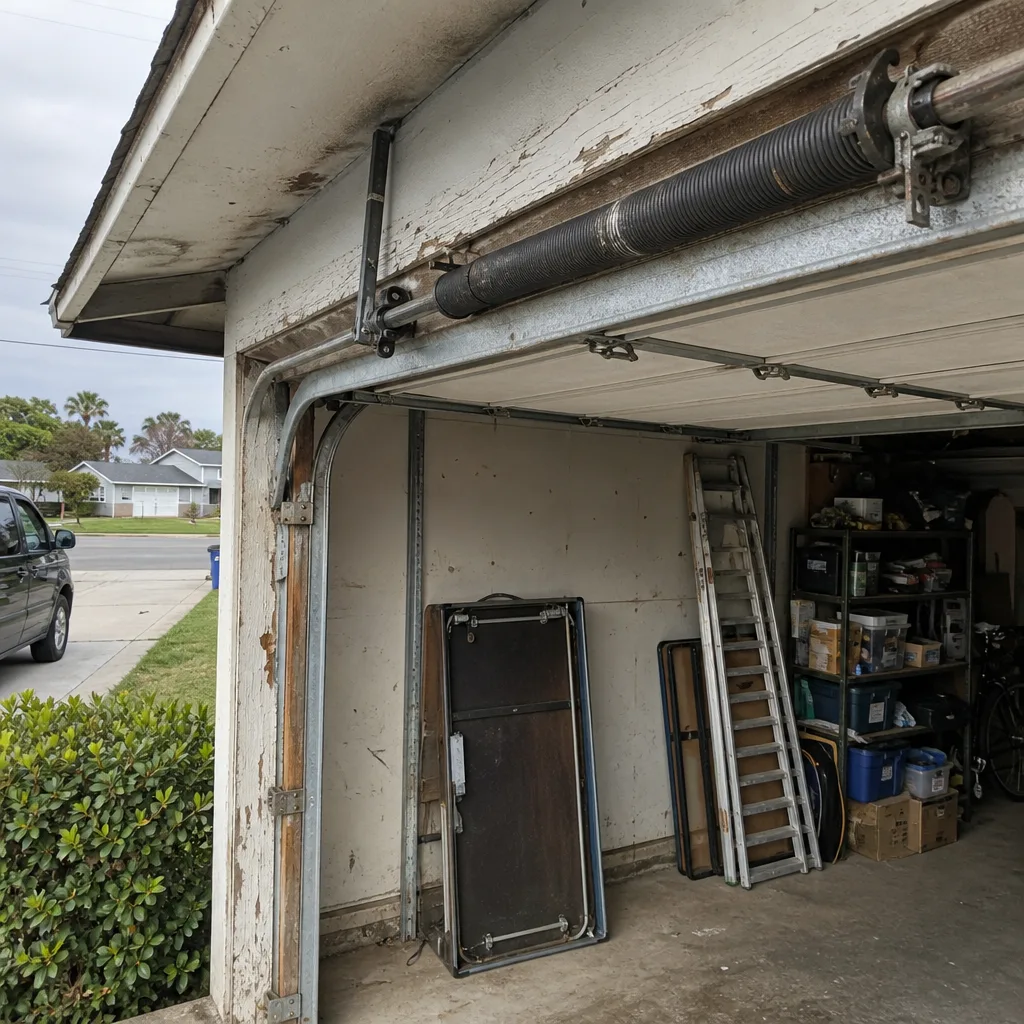 Before
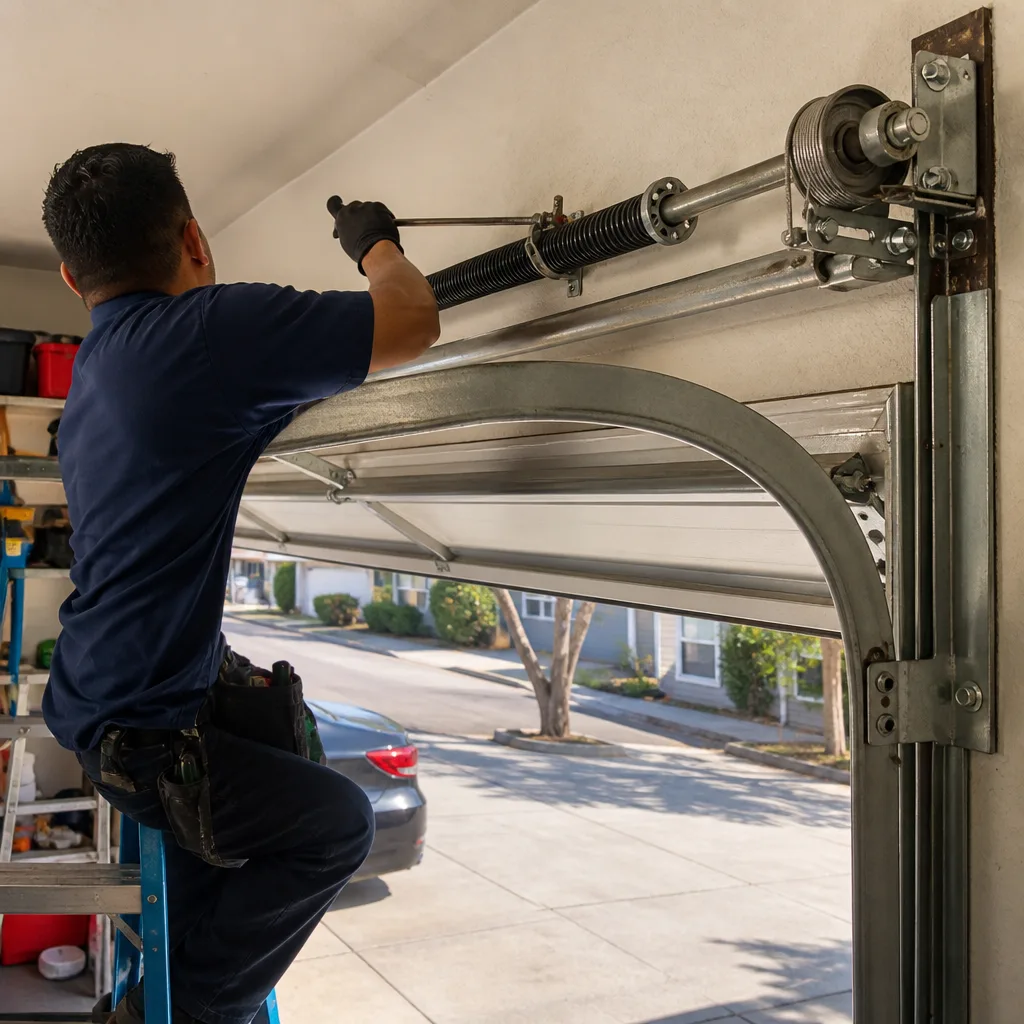 After
After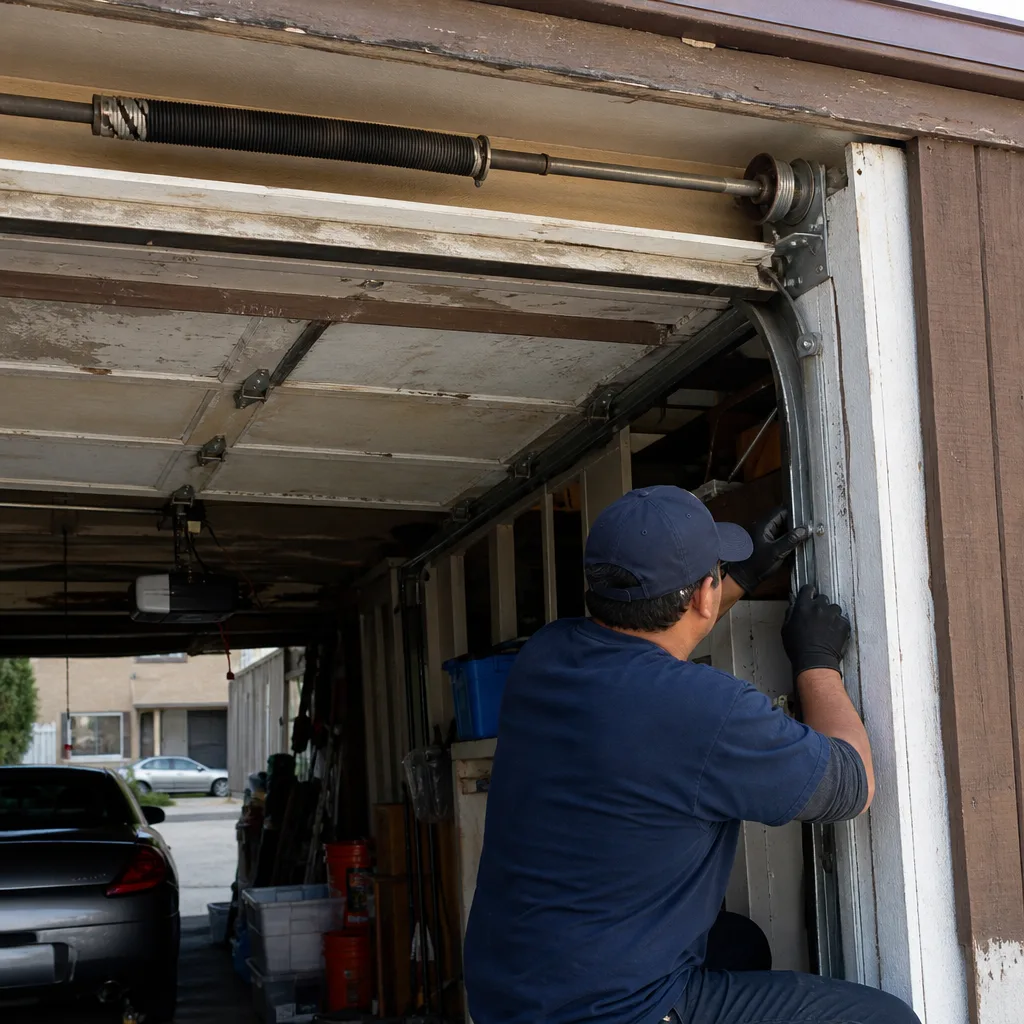 Before
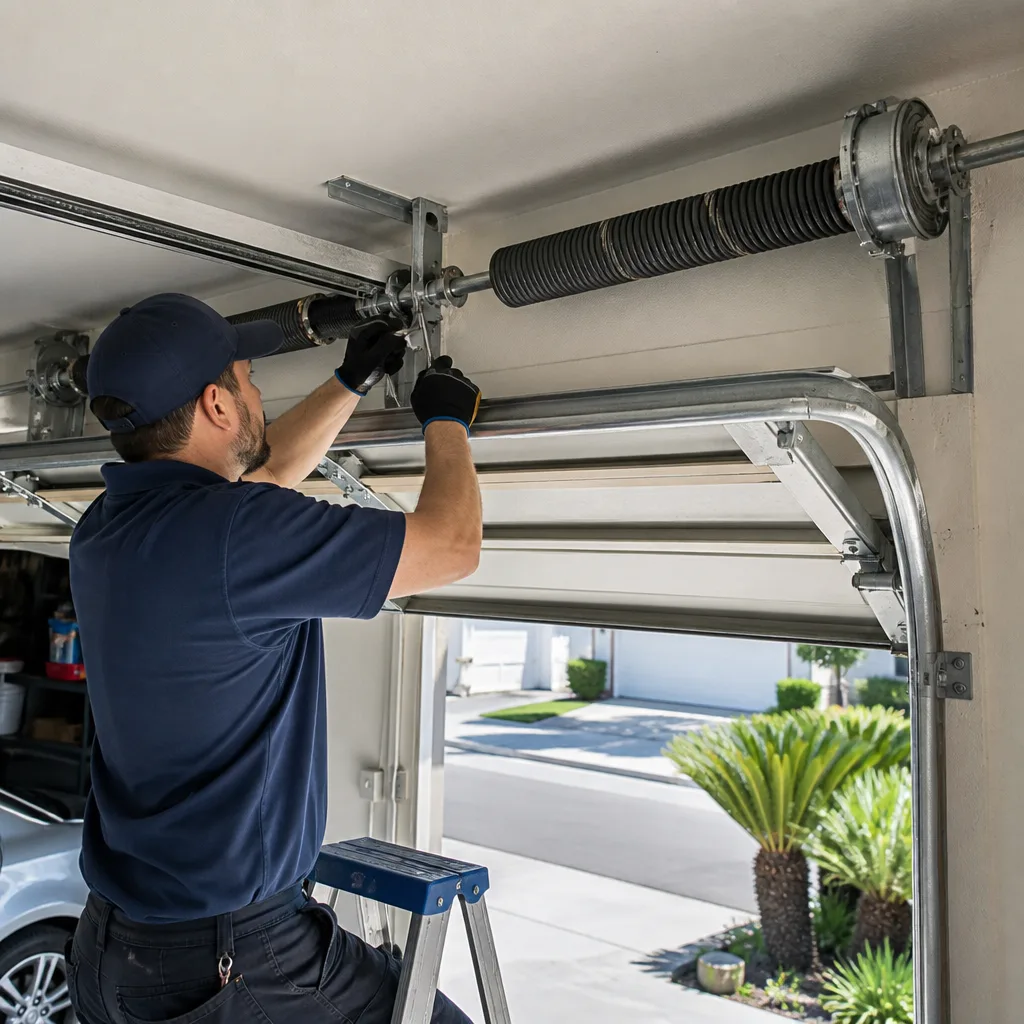 After
AfterClopay Roller Replacement: The Long Beach Owner’s Guide
We stock and install Clopay-compatible garage door rollers in Long Beach, with most replacements running $110-$220 including parts and labor. Same-day service is available when you call before noon, and we carry the most common Clopay spec sizes on the truck: 2″ nylon rollers with 7/16″ stems and 6200 bearings for standard residential doors, plus heavy-duty 11-ball bearing rollers for insulated and double-wide models. You’ll usually discover a roller has failed when the door starts jerking mid-travel, grinding against the track, or tilting slightly as it moves.
Here’s what Clopay owners in Long Beach actually deal with: the coastal air is damp year-round, and steel rollers rust out faster here than they do inland. Sealed nylon rollers fare better, but the bearings eventually go dry and seize. When that happens, the roller stops rolling and starts sliding, which eats up the track and strains the opener. The fix is straightforward, but matching the roller to your specific Clopay series matters more than most people expect.
Which Clopay Models This Applies To
Clopay residential lines break into three families: the entry-level Classic and Value series, the mid-range Gallery and Coachman series, and the premium Reserve and Canyon Ridge lines. The roller spec changes depending on door weight and panel material. Standard steel doors use 10-ball nylon rollers with either a 4″ or 7″ stem. Insulated doors and carriage-house styles often call for 11-ball nylon rollers with hardened steel bearings, and the Reserve line sometimes uses oversized 2.25″ rollers on specific track systems.
The compatibility gotcha: Clopay doors built before 2010 with the older 1″ track radius use a shorter 4″ stem roller, while newer doors with 12″ or 15″ radius tracks take the longer 7″ stem. If someone installs the wrong stem length, the roller can pop out of the track under load. That doesn’t wreck the door immediately, but it accelerates wear on the hinge plates. We check the roller diameter, stem length, and bearing count before we touch anything. For OEM, you’re paying for the Clopay name and a direct match. Quality aftermarket equivalents, like DuraLift or National Hardware 11-ball nylon rollers, meet or beat OEM specs in our experience, and we’ve installed hundreds of them in Long Beach. We’ll use either depending on availability and your budget, and we’ll tell you which one we’re quoting.
Signs Your Clopay Roller Replacement Is Failing
- The door jerks or hesitates at one spot on the track. That’s usually one roller with a seized bearing dragging instead of rolling. The door overcomes it with momentum, which is why it feels like a catch.
- You hear a grinding or scraping sound during operation. When the nylon wheel wears down to the metal hub, or the bearing binds, you get metal-on-metal contact against the track. That sound is the roller and the track wearing each other out.
- The door tilts or appears uneven as it travels. A roller that has flat-spotted or come partially off the track throws the door out of plane. The cables stay tight, but the panel alignment visibly shifts.
- You see visible cracks, wear marks, or wobble in the roller wheel. Nylon rollers degrade in Long Beach’s salt air faster than people expect. A wobbling wheel means the inner bushing has worn, not just the outer surface.
- The door gets louder over time, especially at the top section. As the roller bearings lose their grease and develop play, the door transmits more vibration through the hinges into the panel, and the top section amplifies it.
Replacement Cost & What’s Included
In Long Beach, you’ll pay $110-$220 for a Clopay roller replacement on a typical residential door. That includes all rollers on the door, not just one, because replacing a single roller while leaving its neighbors worn is a false economy. Here’s the breakdown:
- Parts: $30-$80 depending on roller count and whether you need standard 10-ball or heavy-duty 11-ball nylon rollers.
- Labor: $80-$140 for the full swap, which includes removing and reinstalling the bottom bracket, checking hinge attachment points, and lubricating the track system.
- What drives the range: door height and panel count (single vs double), roller spec (standard vs 11-ball), and whether the bottom bracket or cables need adjustment while we’re in there.
The price is quoted before we start and it doesn’t change between the phone call and the driveway. That’s a promise we’ve kept since 2004. We also back the work with our 90-Day Done Right Promise in writing: if the rollers give you any trouble within ninety days, one call to Otto Reinhardt brings us back, no runaround and no restocking fee on the parts.
DIY or Call Us?
You can safely inspect your rollers without touching any high-tension hardware. Look at each roller wheel while the door is closed from inside the garage: check for cracks in the nylon, visible wear on the stem, or rust at the bearing. Do not remove or replace the bottom bracket roller yourself. The bottom bracket holds the cable tension, and that cable is under constant load from the spring. If the cable slips while the bracket is loose, it can snap back with enough force to cause serious injury. That’s the one we insist you let a professional handle.
For the rollers on the middle sections, the work is technically simple but physically awkward, and the door must be held in position with the opener locked or springs carefully managed. Most Long Beach homeowners would rather have us do it in under an hour than spend a Saturday afternoon wrestling a 150-pound door. If you want to try the upper rollers yourself, you can, but if the door has torsion springs, leave the bottom two rollers alone. Call (562) 373-6685 and we’ll give you a straight answer about whether it’s worth doing yourself or letting us handle it. Tell me what it’s doing, and I’ll tell you what it needs.
FAQs
Standard 10-ball nylon rollers typically last 5-7 years in Long Beach’s coastal climate before bearings show measurable wear. The salt air shortens that lifespan compared to inland areas like Riverside or San Bernardino. Heavy-duty 11-ball rollers with sealed bearings can last 10-12 years, which is why we recommend them for any door you plan to keep long-term.
No. Once the nylon wheel has cracked or the bearing has seized, the roller is done. There’s no cost-effective way to press a new bearing into a worn Clopay roller and have it last. Replacement is the only honest fix. Call (562) 373-6685 if you want a second opinion on whether your rollers actually need replacing or just lubricating, and estimates are always free.
A standard Clopay door with two cars’ width takes about 45 minutes to an hour for all rollers. Single-car doors are faster, typically 30-40 minutes. If we find worn hinges or a dry track in the process, we’ll tell you and quote the additional work before doing it.
Yes. We carry both 10-ball and 11-ball nylon rollers, with 4″ and 7″ stem lengths, on our service vehicles when we’re working in Long Beach. We also stock rollers compatible with LiftMaster, Chamberlain, and Genie openers for any power-drive concerns that come up during the visit. If you have a specialty Clopay model, call ahead and we’ll confirm the spec before we show up.
Written by Otto Reinhardt, Owner, Otto’s Garage Door - Long Beach, CA at Otto’s Garage Door, serving Long Beach and nearby areas.