
Last updated September 10, 2026
Full 25-point door and opener safety check with every visit - springs, cables, rollers, tracks, and your LiftMaster or Chamberlain opener included
You get a price before we start. It does not change when the truck arrives.
 Before
 After
After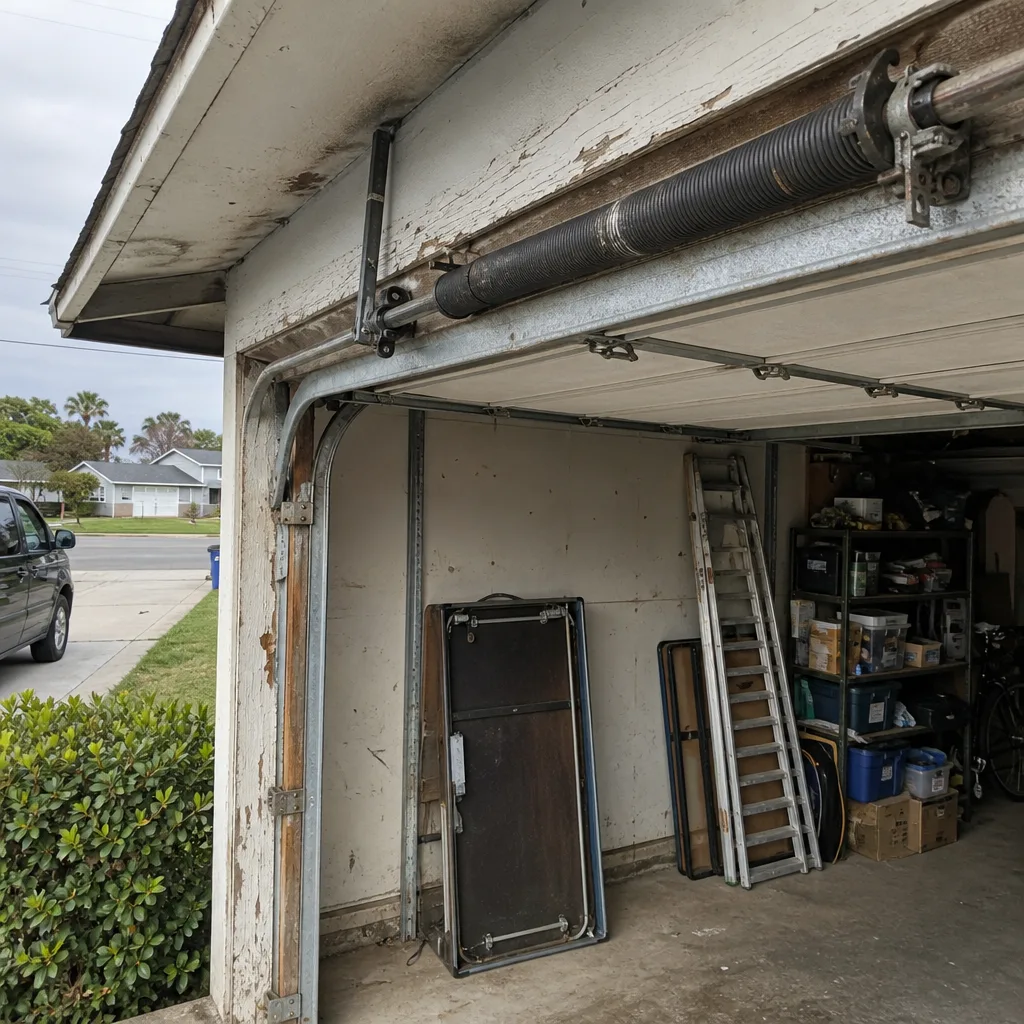 Before
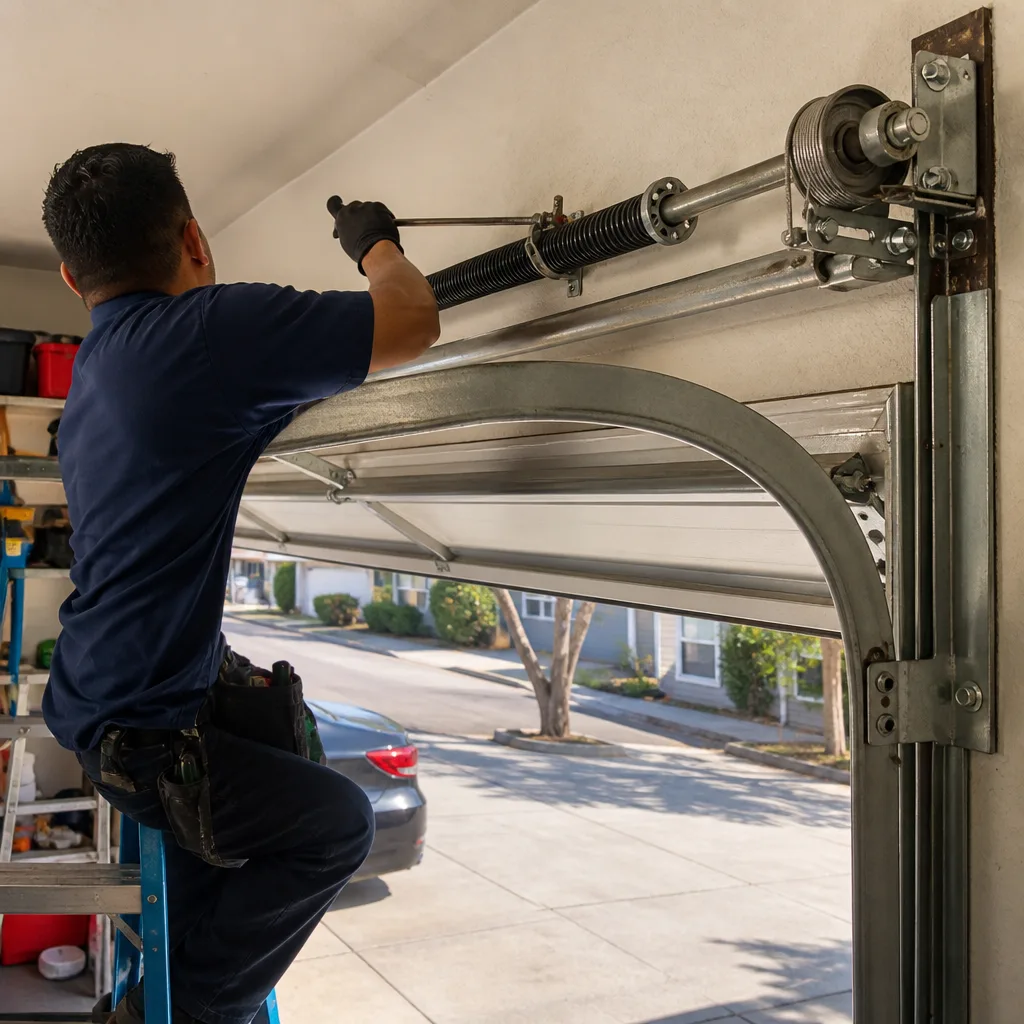 After
After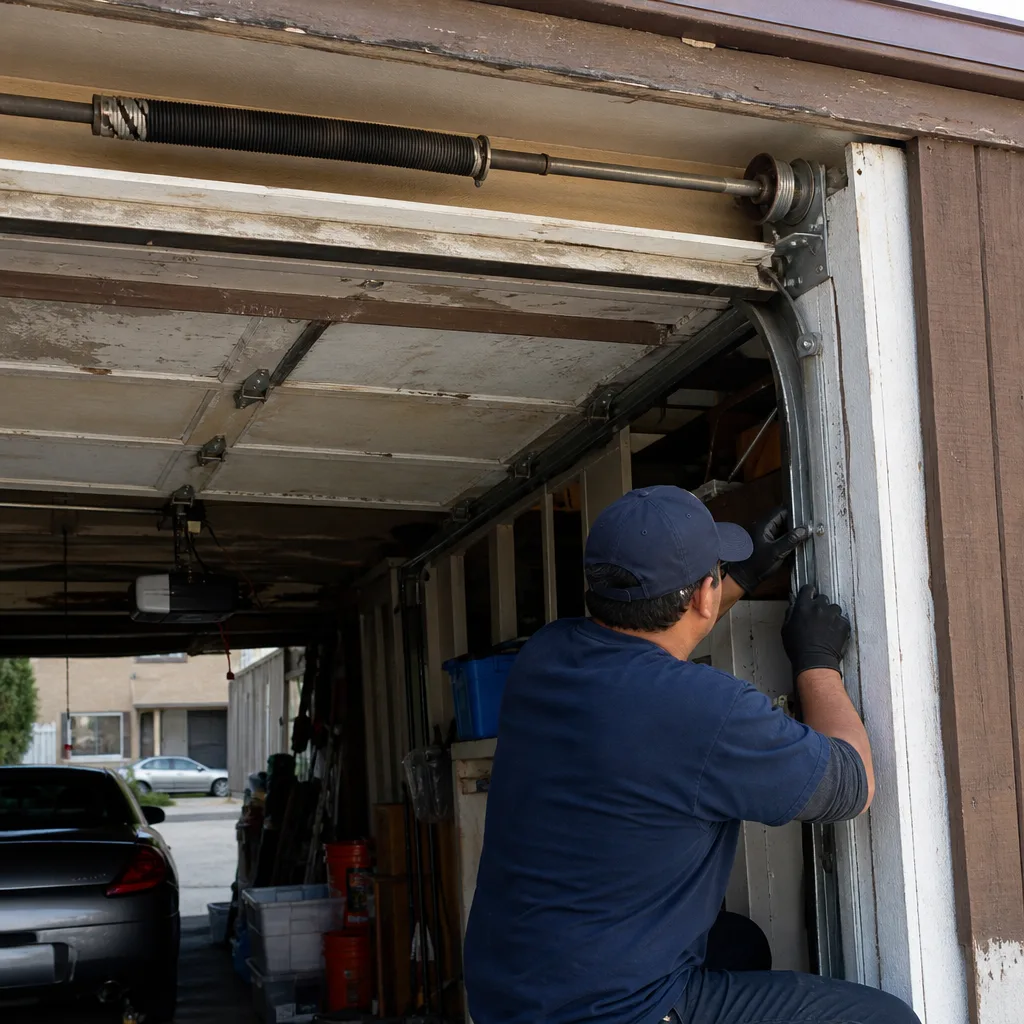 Before
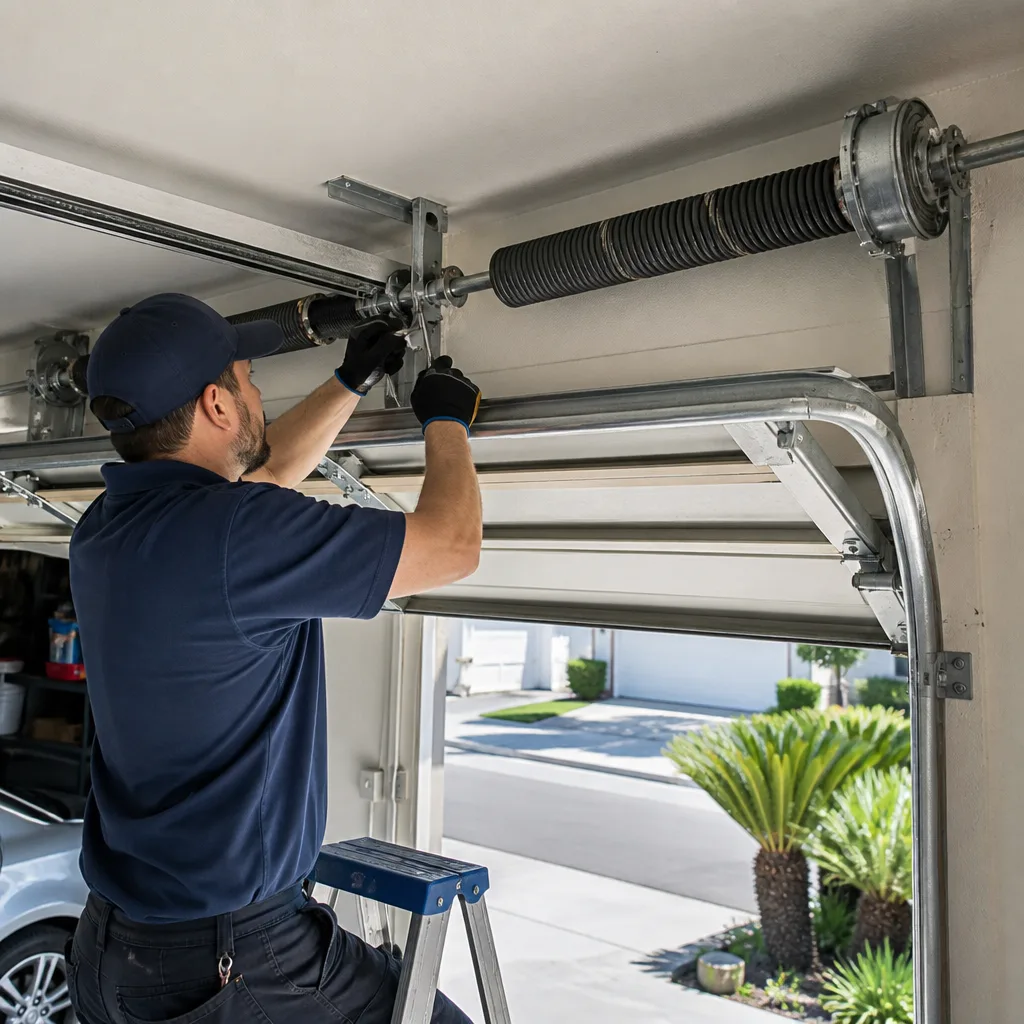 After
AfterSeasonal Garage Door Care for Long Beach: Year-Round Homeowner’s Guide
Otto gets more broken spring calls in October than any other month. Not because of cold weather. Because the Santa Ana winds arrive, the weather turns perfect, and suddenly that garage door is going up and down six, eight, ten times a day. Kids grabbing bikes. You hauling out the patio furniture you stored in March. Weekend projects that finally get started. Springs that were already fatigued from years of cycles hit their limit right then. This guide explains the seasonal pattern most Long Beach homeowners never notice until the door won’t open, and gives you specific checks for each part of the year so you’re not the one calling us at nine at night with a car trapped inside. For a deeper dive, see our Complete Guide to Garage Door in Long Beach.
Quick Answer
Seasonal garage door care in Long Beach means tracking four things: marine layer humidity on electrical components from June to August, Santa Ana wind-driven cycle counts from September to November, rain intrusion at the bottom seal from December to February, and UV damage to paint and weatherstripping from March to May. Spend fifteen minutes per season on the checks below, and you’ll prevent most of the repair calls we get between October and March.
Table of Contents
- Why Long Beach Weather Is Different for Garage Doors
- June-August: Marine Layer Humidity and Your Opener’s Electronics
- September-November: The Santa Ana Wind Effect on Springs and Cycle Count
- December-February: Rain, Bottom Seals, and Water Intrusion
- March-May: UV Ramp-Up and Surface Damage Assessment
- Year-Round: The Freeze-Thaw Advantage That Hurts You
- A Seasonal Maintenance Checklist You Can Print
- Common Mistakes to Avoid
- When to Call a Professional
- Frequently Asked Questions
- The Bottom Line
Why Long Beach Weather Is Different for Garage Doors
Most garage door maintenance advice gets written for places with real winter. Snow and ice freeze tracks, road salt corrodes hardware, and sub-zero temperatures make springs brittle. Long Beach has none of that, and that’s exactly the problem. Homeowners here skip inspections because there’s no annual weather event forcing them to pay attention. A homeowner in Minnesota services the door every October because if they don’t, the thing seizes up by December. A homeowner in Long Beach can go five years without touching the door and it still opens fine, right up until the morning it doesn’t.
What Long Beach actually has is a cycle of moisture, wind, and UV that stresses specific components on a predictable calendar. The marine layer in summer pushes salt-laden humidity into your garage, and electronics don’t love that. Santa Ana winds in fall turn your garage door into the busiest door in the house. Winter brings just enough rain to test every seal on the bottom of the door. Spring sun bakes the paint and weatherstripping that have been quietly degrading for years. Each season targets a different part of the system. If you know which season is attacking which part, you can check that part right before it fails. That’s what this guide is for. Otto’s Garage Door has been doing garage door repair in Long Beach since 2004, and the seasonal pattern below comes from thousands of service calls, not a textbook.
June-August: Marine Layer Humidity and Your Opener’s Electronics
June in Long Beach means gray mornings that don’t burn off until noon, and that marine layer isn’t just fog. It’s a steady supply of salt-laden moisture that rolls into every unsealed crack in your garage. Your garage door opener sits on the ceiling, right where the humidity collects. The logic board inside the opener housing is a printed circuit board, and printed circuit boards corrode. We’ve replaced openers with logic boards that looked like someone poured salt water on them, because in a coastal neighborhood, that’s essentially what happened, a little at a time, for years.
What to check during June, July, and August
- Look for white or green corrosion on the opener housing. Unplug the opener first. Remove the plastic cover if it has screws, and look at the circuit board. If you see chalky residue, that’s corrosion starting. It’s not an emergency, but it’s a warning.
- Wipe down the safety sensors. The photo-eye sensors near the bottom of the door track collect condensation. A fine layer of grime mixed with moisture is enough to make the sensors misalign or trigger falsely. Wipe them with a dry cloth. Don’t spray cleaner on them.
- Check the wall button and remote. If the remote only works when you’re standing directly under the opener, humidity may have degraded the receiver. This is common on openers older than ten years in Long Beach’s coastal air. A failing receiver is often the first sign of a dying logic board.
- Run the opener with the door disconnected. Pull the red release cord and let the opener run alone. If it sounds labored or whines without the weight of the door, the motor or gear is wearing. This has nothing to do with the season, but summer is a good time to catch it before the fall cycle spike hits.
Openers from Genie and Chamberlain are built to tolerate some humidity, but no electronics enjoy marine air forever. If your opener is over twelve years old and you live within two miles of the water, real talk: start budgeting for a replacement. A new garage door opener in Long Beach costs far less than a failed opener plus a service call on a Sunday morning, and it’ll have modern safety features and a much quieter drive.
September-November: The Santa Ana Wind Effect on Springs and Cycle Count
This is the season where Otto’s phone rings the most. Santa Ana winds clear out the haze, the temperature drops into that perfect Long Beach range, and everyone suddenly uses their garage door twice as often as they did all summer. Double the daily cycles. Double the wear. Springs count their life in cycles, not years, exactly the way you count tire miles. A standard torsion spring is rated for about 10,000 cycles. If you run the door four times a day, that’s roughly seven years of life. Bump it to eight cycles a day during Santa Ana season, and you’re eating through spring life faster than you realize.
In our experience, September through November is when springs that have been quietly winding down all year finally snap. The door was fine in August because the spring still had a few hundred cycles left. October burns through those cycles in three weeks. Then one morning you hear what sounds like a gunshot in the garage, and the door won’t budge.
How to do a pre-wind-season spring inspection
- Disconnect the opener. Pull the red release cord. The door should now be free of the opener’s control.
- Lift the door manually to waist height. A healthy door stays put at waist height. It doesn’t drop to the floor, and it doesn’t rise on its own. If it drops fast, the springs are losing tension and need attention soon. If it flies up, the springs are over-tensioned, which also wears them faster.
- Listen for popping or creaking. Open and close the door by hand, slowly. A creaking spring means friction between coils, which accelerates fatigue. A popping sound means coils are binding on the shaft. Both are warnings.
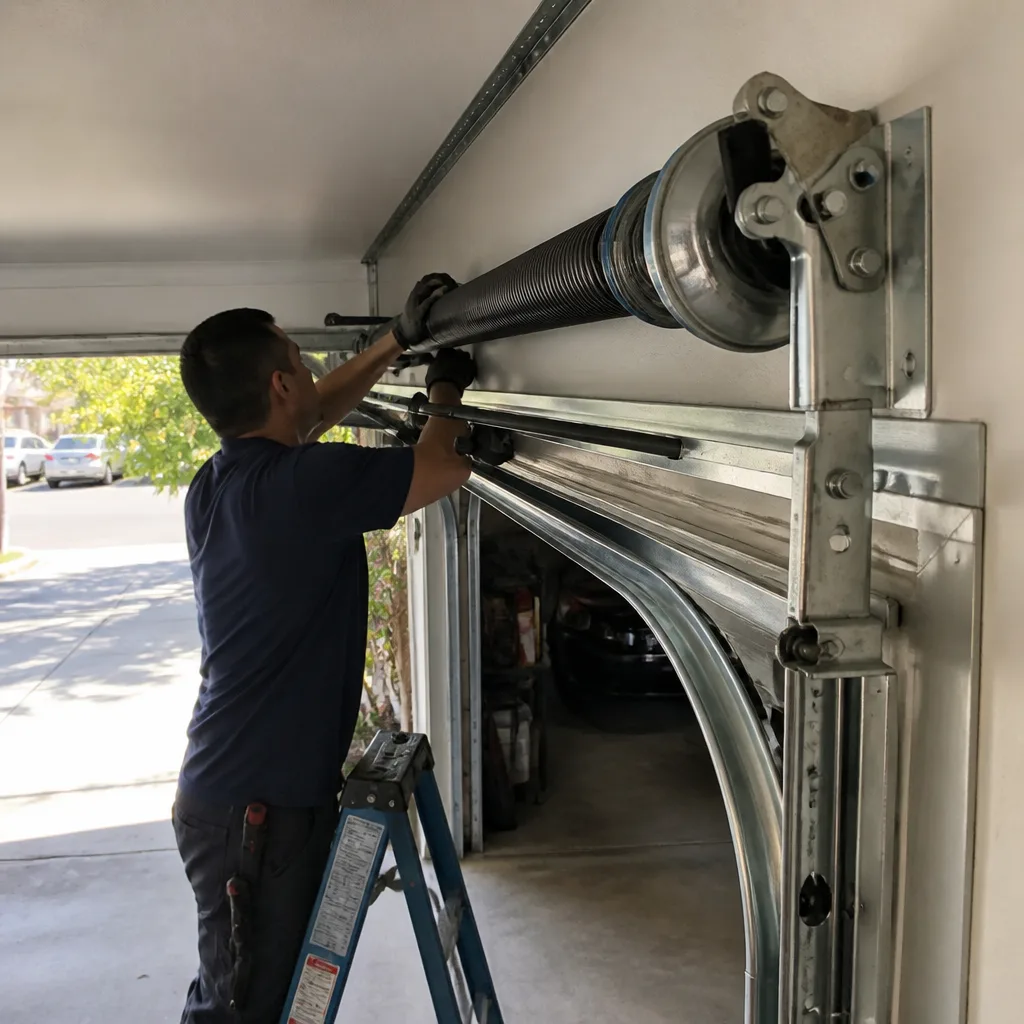
- Look at the gap between coils. On a torsion spring above the door, the coils should be evenly spaced. If you see wider gaps in some sections and tighter gaps in others, that spring is deformed and near the end.
Do this test in late September, before the first big Santa Ana event. If the door drops from waist height or you hear popping, call us. A spring replacement done in September costs the same as a spring replacement done in October, but you get to choose the day instead of waiting for the snap.
One more thing about Santa Ana season: the wind itself pushes against the door. A 40-mile-per-hour gust hitting a 16-foot-wide door is real force. If your door has any looseness in the hinges, rollers, or track, Santa Ana season is when you’ll hear it rattling. Tighten hinge bolts now, and the wind season is a lot quieter.
December-February: Rain, Bottom Seals, and Water Intrusion
Long Beach gets most of its meaningful rain between December and February, and when it comes, it comes all at once. A quarter-inch of rain in a normal year is a non-event. A winter storm that drops two inches in 24 hours is a very different story. Water runs down your driveway, pools against the garage door, and tests every seal on the bottom edge of the door. If that bottom seal is cracked, compressed, or missing chunks, water gets inside. Then whatever you have stored on the garage floor gets wet, and if the water pools against the door tracks long enough, you get surface rust on track brackets.
What to check before and during the rainy season
- The bottom seal (astragal). This is the rubber strip that runs along the bottom of the door. Run your hand along it and look for cracks, flattening, or gaps where it meets the floor. A bottom seal that’s compressed to half its original height isn’t sealing anything.
- The threshold seal. If your garage floor slopes slightly toward the house, or if you’ve had water intrusion in past winters, a threshold seal glued to the concrete under the door makes a real difference. It’s a simple rubber ramp the door closes against, and it stops the standing-water problem better than a new bottom seal alone.
- The weatherstrip around the sides and top. The side seals are called jamb seals. Wind-blown rain is more likely to get past compromised jamb seals than the bottom seal. Check for gaps at the corners, where the side seal meets the top seal. Those corner joints are the weak point on nearly every door we service in Long Beach.
- The garage floor slope. Stand back and look at the floor just inside the door. If you see a water line from previous years, that tells you where water pools. Fix the entry point this winter, and that line won’t grow.
None of this requires the door to be disconnected or the opener touched. It’s fifteen minutes with a flashlight and a dry cloth. If the bottom seal has hardened, it won’t flex to follow small floor irregularities. A new bottom seal costs a fraction of what a water-damaged box of camping gear or a rusted track bracket costs to replace. And if water has already been getting in during past winters, you may have a bigger problem than the seal. A new garage door installation in Long Beach with a properly adjusted seal can solve a recurring puddle problem that no amount of caulk will fix, because the door itself has lost its edge.
March-May: UV Ramp-Up and Surface Damage Assessment
Long Beach gets about 280 days of sun a year, and March through May is when the sun angle climbs fast. That’s when UV exposure stops being a background issue and starts actively aging the exterior surfaces of your door. Paint fades, weatherstripping dries out and cracks, and wood doors start showing hairline splits along the panel edges. The damage doesn’t look urgent in April. It looks like a little fading, a little cracking. By the time it looks urgent in August, the surface has already failed and the real damage is happening underneath.
UV damage is cumulative and one-directional. Once the protective paint layer is compromised, UV gets into the substrate. On a steel door from Amarr or Clopay, that means the primer fails and you get surface rust. On a wood door, it means the wood fibers dry out and crack, which lets moisture in next winter, which starts rot. This is how doors that look fine in March become doors that need panel replacement in September.
Spring surface assessment steps
- Wash the door. Plain water and mild soap, a soft brush, and a rinse. You’re not detailing a car; you’re removing six months of road dust and salt film so you can see what the surface actually looks like.
- Look at the paint on the weather-facing side. If the paint looks chalky or leaves color on your hand when you rub it, the paint layer is oxidizing. On a metal door, that’s the warning before rust. On a wood door, it’s the warning before cracks.
- Check the weatherstripping for flexibility. Pinch the side weatherstripping between your fingers. It should compress and spring back. If it feels like hard plastic or leaves a white line where you pinched it, UV has wrecked it. Replace it before next winter’s rain.
- Inspect wood door panels at the joints. On wood doors from Wayne Dalton or custom builders, look at the bottom rail and the seams between panels. Hairline cracks there will widen with every hot-cold cycle. A bead of paintable exterior caulk in March is cheap. A replacement panel in September is not.
- Reapply protective finish if needed. If the paint is still structurally sound but looks tired, a fresh coat of exterior paint designed for doors keeps the UV from getting through. Do it before June’s long, hot days arrive.
If you catch a door at the chalking stage, a paint job adds years. If you wait until the rust or rot shows, you may be looking at panel replacement or a new door. The difference is March versus August, same door.
Year-Round: The Freeze-Thaw Advantage That Hurts You
Here’s the counterintuitive part of owning a garage door in Long Beach: the climate that’s so gentle on your door is exactly what makes neglect so common. Homeowners in Minnesota can’t ignore their garage door. It forces itself on their attention. The tracks freeze, the springs snap in January, and every fall they service the door because the alternative is being stuck outside in sub-zero weather. That annual forced inspection catches small problems before they become big ones.
Long Beach has no forcing function. The door keeps working. The springs have no freeze-thaw cycle to accelerate failure. The tracks never ice up. So homeowners go years without inspecting anything, and when something finally fails, it’s not a single component that was fine last week and broke. It’s a cascading failure: a spring that’s been fatigued for two years finally snaps, and when you replace it, you discover the rollers were worn flat and the hinge brackets were loose, because nobody had touched the door since 2019.
The absence of extreme weather is a maintenance disadvantage in disguise. No season here will ever scream at you to service the door. That’s why the seasonal check-in matters. Put it on your calendar. Fifteen minutes in June, fifteen in September, fifteen in December, fifteen in March. That’s one hour a year. It’s the cheapest insurance on the single largest moving object in your home, and it’s the difference between replacing a $12 bottom seal and replacing a water-damaged garage floor section.
A Seasonal Maintenance Checklist You Can Print
Here’s the whole guide compressed into a checklist. Print it and stick it on the garage wall. Do the checks in the season they belong to, and you’ll have covered the four failure modes that account for the majority of Long Beach garage door service calls.
Summer (June-August): Electronics
- Unplug opener, remove housing cover, inspect logic board for corrosion.
- Wipe photo-eye safety sensors with a dry cloth.
- Test remote range from the street. Weak range means receiver degradation.
- Run opener with door disconnected. Listen for a labored motor.
Fall (September-November): Springs and Cycles
- Do the manual lift test: door should hold at waist height without dropping.
- Listen for popping or creaking when moving the door by hand.
- Check spring coils for even spacing. Uneven gaps mean the spring is deforming.
- Tighten all hinge and track bolts before Santa Ana winds arrive.
Winter (December-February): Water
- Inspect bottom seal for cracks, flattening, or gaps against the floor.
- Check corner joints where side weatherstripping meets the top seal.
- Look for water lines on the floor just inside the door from previous years.
- If water has intruded before, consider a threshold seal glued to the concrete.
Spring (March-May): UV and Surfaces
- Wash the door and check for chalky, oxidized paint.
- Pinch weatherstripping to test flexibility. Hard, cracked stripping needs replacement.
- Inspect wood door panel joints for hairline cracks. Caulk them early.
- Repaint or refinish exterior surfaces if the protective layer is failing.
Common Mistakes to Avoid
- Ignoring the door because it still works. A garage door is 200 pounds riding on two springs. It keeps working right up until the spring snaps. “Still working” is not an inspection result. Do the manual lift test twice a year and you’ll see failure coming months in advance.
- Lubricating the springs and hoping that fixes the creak. A creaking spring is a friction problem inside the coil, not a lubrication problem. Adding grease quiets it for a week, then the noise returns and the spring keeps fatiguing. The only real fix is replacement, and the earlier you catch it, the less likely you are to be stuck with the door half open.
- Replacing the opener when the door is the problem. If the door is hard to lift by hand, a new opener won’t fix it. If the opener is straining, the problem is almost never the opener. Diagnose the door first. A new opener attached to a failing spring is just buying a second service call.
- Waiting until October to check the springs. Santa Ana season is when springs fail because they take the final abuse they can’t handle. Checking the springs in September, or better yet, in May, gives you the power of scheduled replacement instead of emergency replacement. Same price, better calendar.
- Caulking over a failing bottom seal instead of replacing it. Caulk works on static gaps in a house, not on a moving door that compresses its bottom seal every time it closes. The seal flexes; the caulk cracks. Replace the seal. It’s a $12 part and twenty minutes of work.
- Replacing hardware without matching the door’s weight. Not all springs and rollers are created equal. A spring rated for a lightweight single-car door won’t hold a 200-pound double door, and installing it anyway is dangerous. If you’re replacing springs, know your door’s exact weight and get parts rated for it.
- Forgetting that coastal air accelerates corrosion. Living near the water in Long Beach means your door hardware will rust faster than the same hardware in Riverside. The marine layer carries salt, and salt eats steel. Treat corrosion as a when, not an if, and check hardware annually.
When to Call a Professional
Some things a homeowner can do safely in fifteen minutes. Inspecting seals, wiping sensors, tightening hinge bolts, and washing the door are all fair game. But when a spring snaps or a cable frays, that’s where you stop - a topic we explore in our DIY vs Professional Garage Door guide for Long Beach homeowners. Torsion springs are under enough tension to seriously injure or kill a person who tries to remove one without the proper winding tools and experience. A door is 200 pounds riding on two springs. Respect it. Same goes for cable work: a frayed cable that snaps under load releases the door’s full weight with nothing controlling it. If you see a broken spring, a frayed cable, or a door that’s come off its track, call a professional. Otto’s Garage Door offers free estimates in Long Beach - call (562) 373-6685 and a live person answers, day or night.
Frequently Asked Questions
We recommend a professional inspection once a year, plus the four seasonal self-checks described in this guide. Long Beach’s climate doesn’t force maintenance the way cold-weather climates do, so an annual professional visit catches what the seasonal checks miss: spring tension calibration, track alignment, and opener force settings. The self-checks take fifteen minutes per season and cover the four failure modes that drive most Long Beach service calls.
A torsion spring replacement in Long Beach typically costs between $180 and $340 for a single spring on a standard double door, depending on the spring’s cycle rating and your door’s exact weight. See our Garage Door Cost Breakdown for Long Beach homeowners for full 2026 pricing details. We carry springs rated from 10,000 to 50,000 cycles, and we’ll quote the price on the phone before we come out. Call (562) 373-6685 and Otto will give you an exact number for your door, not a range.
We do not recommend it. Torsion springs hold enough stored energy to seriously injure you if the winding bar slips or the spring breaks during installation. Professional installation also includes calibrating the spring tension to your door’s exact weight and checking the balance, which is nearly impossible to do correctly by feel. If the cost feels high, ask about the Senior & Veteran 10% discount - it applies to every job, always.
Yes. A live person answers the phone 24/7, including nine at night when a spring lets go and your vehicle is sealed inside. Often it’s Otto himself. He’ll quote the job on the call and hold that price when he gets there - the number you’re quoted on the phone is the number on the invoice. Call (562) 373-6685 any hour.
No. The price quoted on the phone is the price on the invoice. If Otto finds a second issue during the repair, he’ll show it to you, explain it, and give you a separate price for that work before anything is done. You approve or decline. Nothing gets added to the bill without your say-so, and the 90-Day Done Right Promise is written on every invoice. If it’s not done right, we make it right.
In Long Beach’s coastal air, we recommend belt-drive openers from Genie or Chamberlain for their quieter operation and better resistance to humidity-related motor wear. Chain-drive units are noisier, and noise matters when the garage shares a wall with a bedroom. The logic board is the first thing to fail in marine air regardless of brand, so keep the opener housing area well-ventilated and check for corrosion every summer as described above. Call (562) 373-6685 for a garage door opener in Long Beach priced for your setup.
The Bottom Line
Long Beach seasons don’t blast your garage door with snow and ice, but they do attack it in quieter ways: summer humidity corrodes electronics, fall winds multiply cycle counts on tired springs, winter rain tests every seal, and spring sun bakes surfaces that should have been refinished years ago. The pattern is predictable, and a homeowner who knows it can prevent most of the repair calls we get in October and March by spending one hour a year on the checks in this guide. Do the manual lift test in September. Check the sensors in June. Check the seals in December. Check the paint in April. If anything looks wrong, call (562) 373-6685 and we’ll take it from there. For more guides & resources, visit our blog. We’ve been serving Long Beach since 2004, and Otto is a palindrome: reads the same from either end, same as the door. That’s the kind of consistency you can count on.
Written by Otto Reinhardt, Owner at Otto’s Garage Door, serving Long Beach since 2004.