
Last updated September 10, 2026
Full 25-point door and opener safety check with every visit - springs, cables, rollers, tracks, and your LiftMaster or Chamberlain opener included
You get a price before we start. It does not change when the truck arrives.
 Before
 After
After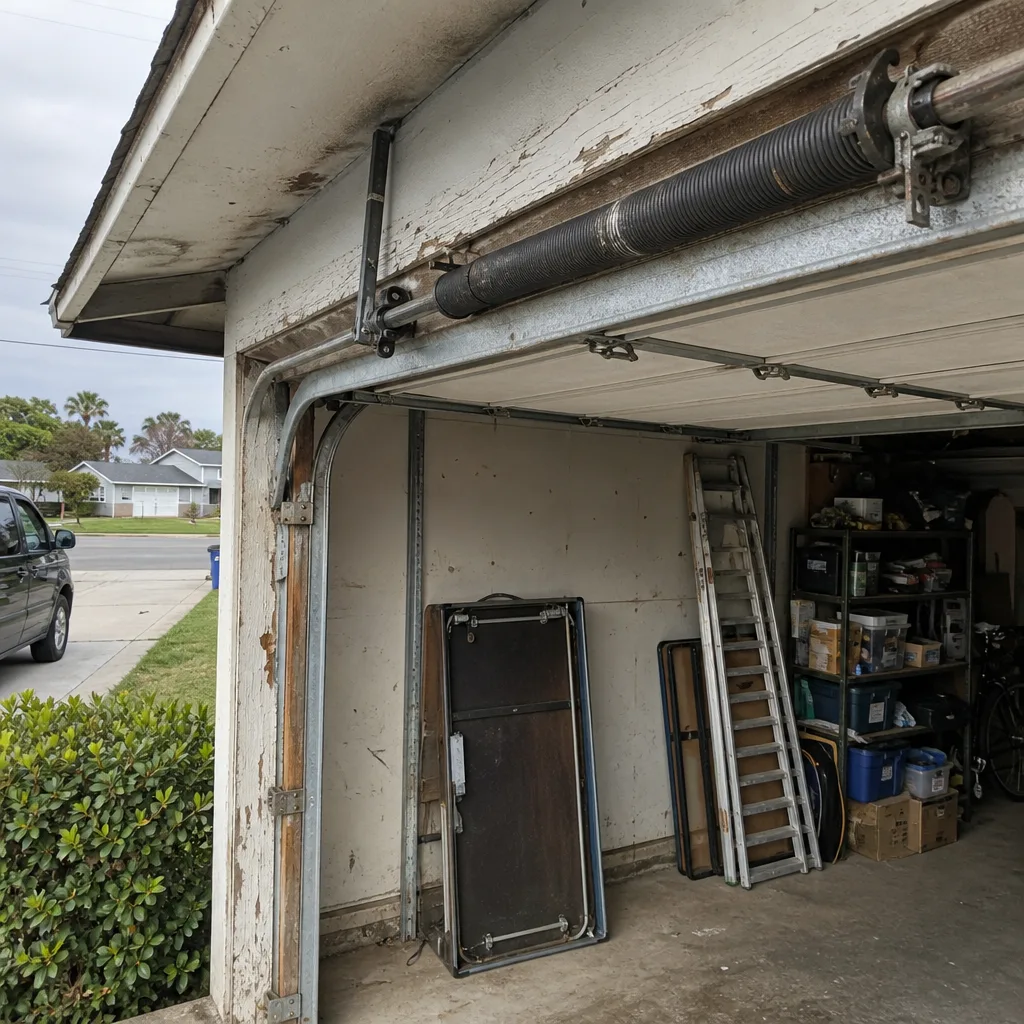 Before
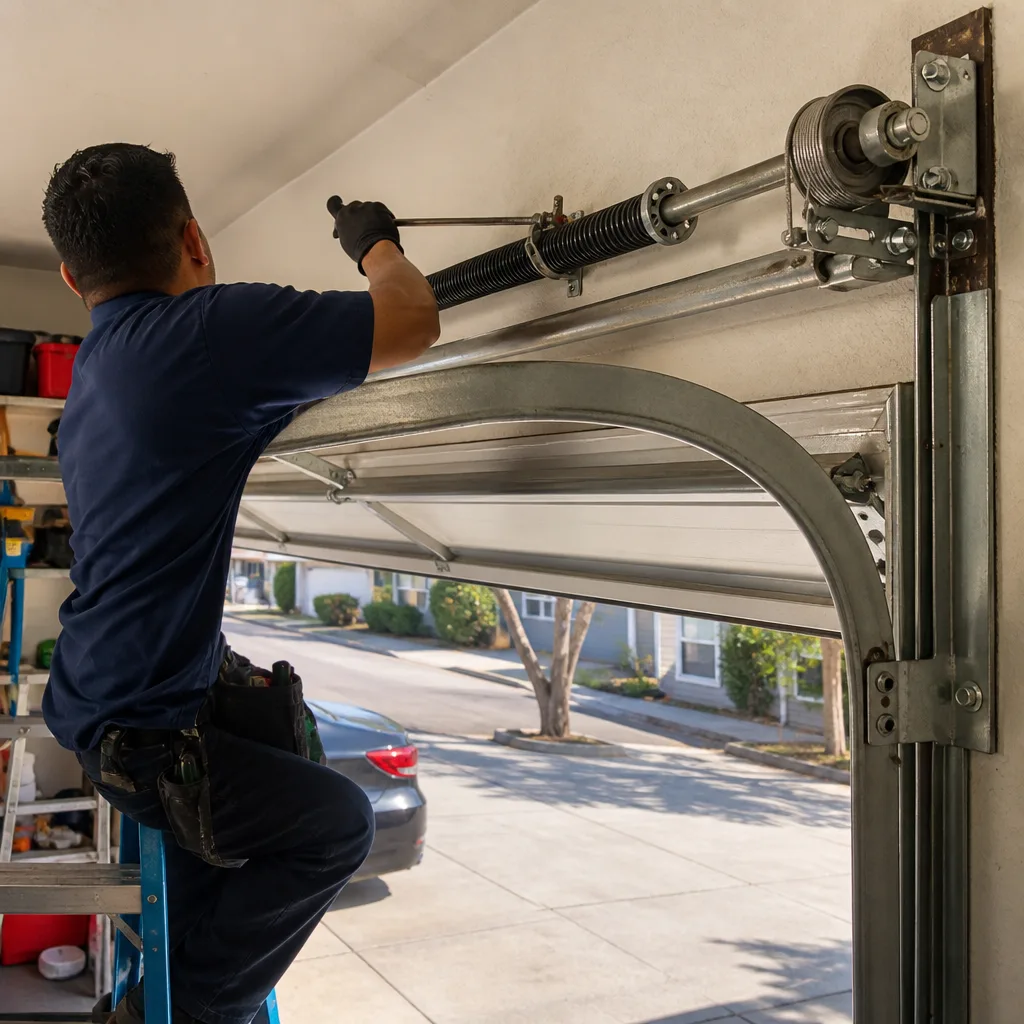 After
After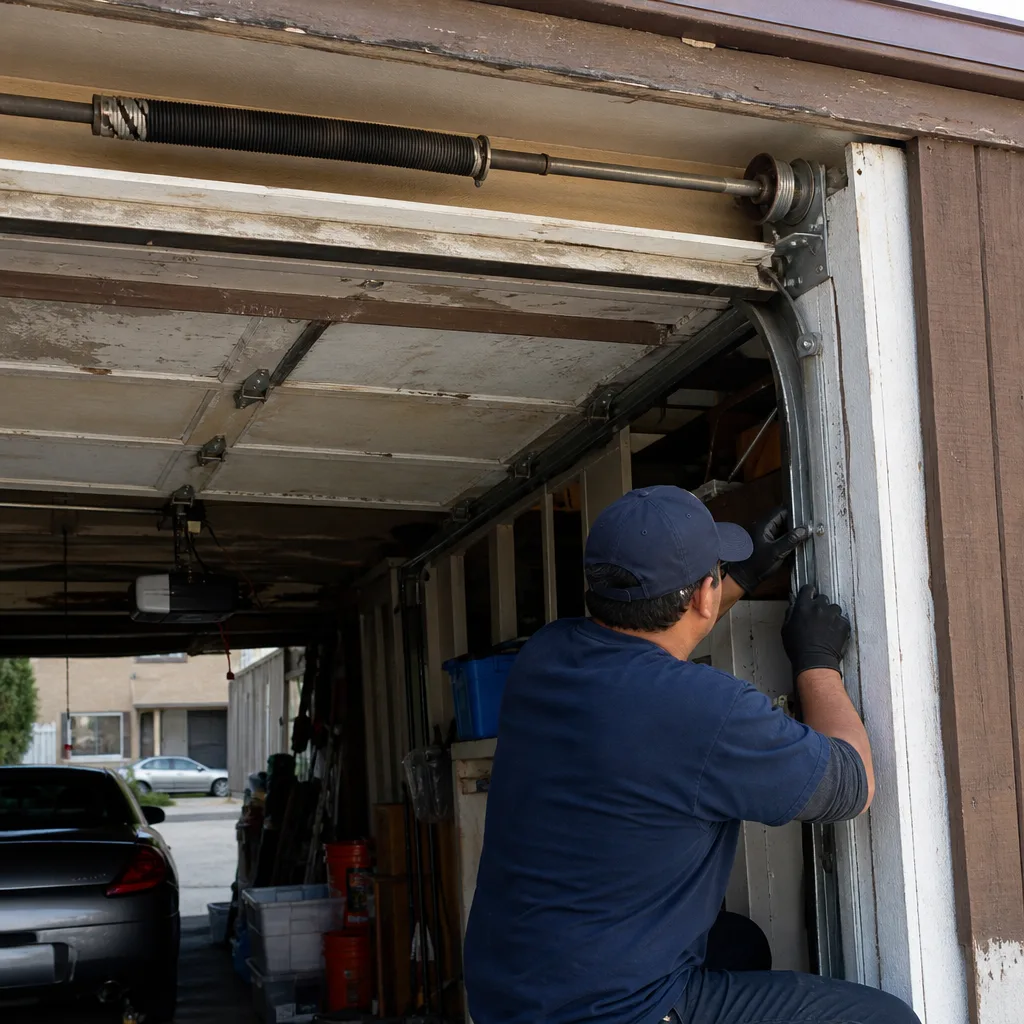 Before
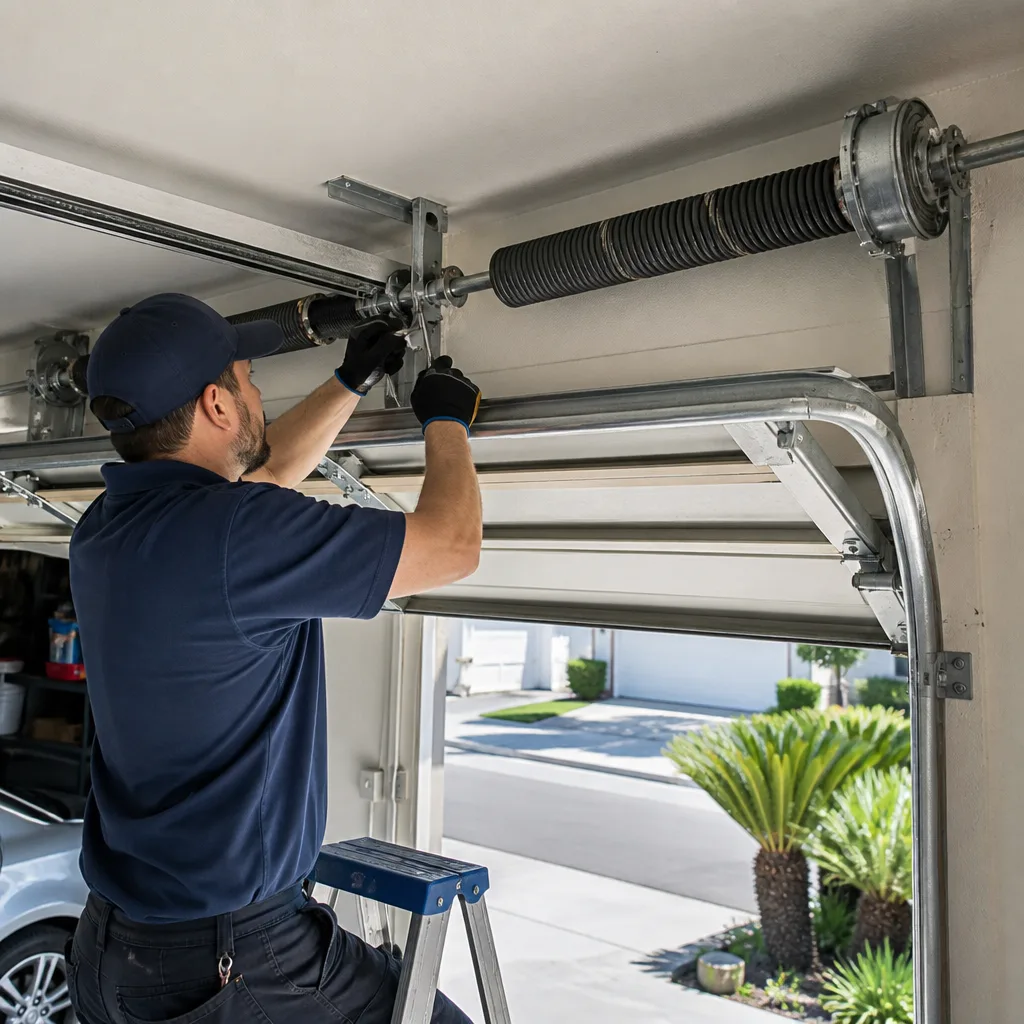 After
AfterHow to Hire a Garage Door Contractor in Long Beach: A Step-by-Step Guide
There are over 40 garage door companies that will show up in a Long Beach search result. Fewer than a third carry a physical Long Beach address. The rest are lead-generation fronts, out-of-state call centers with local phone numbers, or one-man operations running out of a UPS box in Lakewood. You can’t tell the difference from the search page. But you can tell in about three minutes on the phone, and this guide-along with our Complete Guide to Garage Door in Long Beach-gives you the exact questions to ask, the license checks to run, and the red flags that tell you to hang up before you book. We’ve been fixing garage doors in Long Beach since 2004, and we’ve seen every trick in the book. Here’s how to avoid them.
Quick Answer
To hire a garage door contractor in Long Beach, verify their California contractor license on the CSLB website, confirm they have a physical Long Beach address, ask whether the person you speak with on the phone is the same person who will show up at your door, and get a written estimate that separates labor from parts. A legitimate local shop will answer all five screening questions without hesitation. A bait-and-switch operation will fumble.
Table of Contents
- Step 1: Verify the California Contractor License (It Takes Two Minutes)
- Step 2: The Five Phone Questions That Expose a Bait-and-Switch
- Step 3: How to Read a Written Estimate Line by Line
- Step 4: Why “Same-Day Service” Can Mean a Different Tech Every Time
- Step 5: Red Flags Specific to Long Beach and the Surrounding County
- Step 6: What Actually Matters in a Garage Door Contractor
- Step 7: Insurance, Bonding, and Written Warranties
- Step 8: Questions to Ask Before You Book the Appointment
Step 1: Verify the California Contractor License (It Takes Two Minutes)
Every garage door contractor doing work over $500 in California must hold a valid license from the Contractors State License Board, or CSLB. Garage door work typically falls under a C-61/D-28 classification, which covers door and gate installation and repair. A general building contractor, class B, can also legally perform garage door work. What matters is that the license exists, is active, and belongs to the person or company you are actually hiring.
Here’s the process in Long Beach, step by step:
- Go to the CSLB website and click “Check a License.”
- Enter the company name or license number. Any contractor worth hiring prints their license number on their website, their van, and their estimate. If you can’t find a license number anywhere, that’s your first red flag.
- Look beyond the word “Active.” Open the full license detail page. Check the “Bond” amount. California requires a $25,000 contractor bond, but a company carrying a higher bond, or additional bonds like a bond of qualifying individual, is putting more skin in the game.
- Look at the “Business Address.” If the address is in Long Beach, Signal Hill, Lakewood, or another nearby city, good. If it’s in Nevada, Arizona, or a Florida office park, the “local” company is not local.
- Check the “Workers’ Comp” field. If the company has employees, they need workers’ comp insurance. If they don’t carry it and an installer gets hurt on your property, the liability can land on you.
- Scroll to any “Actions” or “Complaints” section. The CSLB publishes certain disciplinary actions. A clean record over several years says something. A pattern of complaints says something louder.
One more thing about the license: match the name. In Long Beach, we regularly see companies use one legal name on their license and a completely different “doing business as” name on their ads. The CSLB page will show both if you look. If the name on the estimate does not match the name on the license, ask why. A straight answer comes back in one sentence. A mumble means something is off.
We publish our license number on every invoice and on our website. You can look us up before the van leaves our driveway. Otto Reinhardt founded this shop in 2004, and Otto’s Garage Door is the name on the license, the van, and the invoice. That’s the way it should work.
And while you’re at it, take a look at our Otto’s Garage Door home page to see exactly what a local, verifiable operation looks like online.
Step 2: The Five Phone Questions That Expose a Bait-and-Switch
The garage door industry has a bait-and-switch problem, and Long Beach is not immune. The model works like this: a company advertises a low service call fee or a low spring replacement price. They book the job. A technician arrives, “inspects” the door, and discovers that you also need new rollers, new cables, new hinges, and a new opener. The $89 special becomes an $850 invoice before you’ve had your coffee. The technician gets a commission on the upsell. The company doesn’t care if you never call again, because they have 5,000 more ad clicks coming.
You can identify these operations before anyone opens a van door. Here are the five questions to ask on the phone:
- “What is your parts markup policy?” A legitimate shop will tell you that parts are marked up a standard industry percentage, or they’ll tell you they use everyday retail pricing from a local distributor. A bait-and-switch operation will dodge this question, because their entire margin is built on inflated parts pricing applied at the door.
- “Am I speaking with the person who will come to my house, or a dispatcher?” If the answer is a dispatcher, a call center, or “our scheduling team,” the person quoting you has never held a torsion spring. The quote they give you is a scripted number, not a diagnosis. The person who actually arrives is under pressure to raise the total. At Otto’s Garage Door, the person who answers the phone is often Otto himself. He quotes the job on the call and holds that number when he gets there.
- “What is your physical business address in Long Beach?” Write it down. Then look it up on Google Maps. If the address resolves to a UPS Store, a shared office suite, or a residential house in Lakewood, that’s not a garage door company. It’s a mail drop. We work out of a real shop at a real address, and you can drive past it.
- “Do you charge a trip fee if I don’t book the repair?” Some companies waive the trip fee only if you approve the work. That’s a pressure tactic. You should never be financially leveraged into approving a repair you haven’t had time to think about. We don’t charge a trip fee inside our home county, and we never have.
- “Can you email me the estimate before you leave your shop?” A straight operation sends a written estimate with labor and parts separated before the truck rolls. A bait-and-switch operation wants to keep the numbers verbal until the technician is standing in your driveway and you feel the social pressure to say yes.
Five questions. Two minutes. If the answers make you squint, thank them for their time and call the next number. Speaking of next numbers, if you’re dealing with a broken spring right now, read our detailed page on Garage Door Repair in Long Beach before you make the first call.
Step 3: How to Read a Written Estimate Line by Line
A written estimate is a contract in miniature. Every line tells you something about how the company does business. Here’s how to read one, line by line, using the standards we apply to every estimate we write in Long Beach.
Labor and parts should be separated. Always. An estimate that bundles “spring replacement: $389” with no breakdown hides the parts cost inside the labor cost, or vice versa. A clean estimate lists the spring part number or at least the spring type (torsion, extension), the parts cost, the labor cost, and the total. If you see one number and a vague description, ask for the breakdown. If the company won’t provide it, that’s an answer in itself.
Look for exact part names, not vague phrases. “Door repair” is not a scope of work. “Replace both torsion springs with 0.225 wire, 2-inch inside diameter springs rated for 10,000 cycles” is a scope of work. The same goes for openers: “installing a Chamberlain B6755T” tells you what you’re getting. “New opener” doesn’t. Legitimate shops name their parts.
Check the warranty line. How long are the parts warrantied? How long is the labor warrantied? A spring that fails in six months should be replaced free. The estimate should say so. At Otto’s Garage Door, every job carries our 90-Day Done Right Promise: ninety days in writing, on every garage door job, and if it’s not done right we make it right. One call brings Otto back. No runaround.
Look for line items you didn’t ask for. “Disposal fee” for the old door. “Environmental surcharge.” “Shop supplies.” Some of these are legitimate, but a reputable company rolls them into the quote upfront instead of adding them as gotchas. If a fee appears on the estimate that was never mentioned on the phone, ask what it covers.
Read the payment terms. A responsible contractor may ask for a deposit on a new door installation, since the door has to be ordered and built. But a repair should never require full payment upfront. And no legitimate company pressures you to pay before the door operates correctly. If the estimate includes a line about payment due before completion, walk away.
For a full breakdown of what new door pricing should look like on paper, see our Garage Door Installation in Long Beach page.
Step 4: Why “Same-Day Service” Can Mean a Different Tech Every Time
“Same-day service” sounds reassuring. But in the garage door world, it often means something else: whoever is closest to your zip code at 2:00 p.m. gets the job. Large national dispatch companies, the ones running ads from out of state, treat technicians like interchangeable parts. The guy who shows up on Tuesday is not the guy who’ll come back if something goes wrong in November. And when a warranty issue comes up six months later, you’ll be explaining your problem to a new person who has never seen your door.
Here’s why that matters in Long Beach specifically, as we detail in our Seasonal Garage Door Care for Long Beach guide: the salt air off the harbor accelerates corrosion on springs, cables, and hinges. A door that works fine in June may have significant rust wear by January. If the technician who installed your springs counted the cycles and wrote down the wire gauge, the follow-up is easy. If not, every future visit starts from zero. Consistency is the point.
A better question to ask than “can you come today?” is “who comes when I call back?” At Otto’s Garage Door, the person who answers your call has probably worked in Long Beach for years. We’ve been in this county since 2004. The guy who fixes your door lives in the area, shops in the area, and will see you at the hardware store. That changes how he works.
Speed still matters when your car is stuck in the garage and you need to get to work. A live person answers our phone 24/7, including nine at night when a spring lets go. But the reason we can promise the price on the call and hold it at the door is that we know what we’re looking at before we leave the shop. That comes from experience, not from a dispatch algorithm.
Step 5: Red Flags Specific to Long Beach and the Surrounding County
Every region has its own patterns, and Long Beach has a few that we see over and over. Knowing them before you search can save you a thousand dollars and a week of stress.
- The UPS Store address. Pull up the company’s address on Google Maps. If it’s a UPS Store on East 7th Street or a shared office suite near the airport, that’s a lead-generation business, not a repair shop. A real garage door company has a shop with roll-up doors, a parts inventory, and a truck or two parked outside. You should be able to drive by and see it.
- The Lakewood or residential address. A surprising number of “Long Beach garage door companies” are registered to a townhouse in Lakewood or a rental house near Signal Hill. That’s someone running a one-person operation out of a garage, which is not automatically bad, but it is a different risk profile. If they’re not registered to a commercial address, ask whether they carry a full supplier parts account and what happens when they’re on vacation.
- The too-good phone quote. If a spring replacement is quoted at $119 over the phone, that number is fiction. Two quality torsion springs for a standard Long Beach door cost more than that wholesale. The company is going to make up the difference at your doorstep. No legitimate shop can replace both springs, on-site, for less than the parts cost. If the number sounds too good, it is.
- The “we do everything” website. Garage door repair, plumbing, electrical, landscaping, pressure washing. A company that claims to do everything specializes in nothing. Garage doors are a specific trade with specific tools and specific risks. A 200-pound door under torsion is not something you want fixed by someone who also does drywall.
- The van with no markings, or a rented truck. Licensed, established contractors drive marked vehicles. The van should carry the company name and license number. A plain white rental truck with magnetic signs from three different companies stacked in the back seat is a red flag you can see from your window.
None of this is about being suspicious. It’s about being methodical. You’re hiring someone to work on a 200-pound moving object attached to your house. Respect it. We do, every time.
Step 6: What Actually Matters in a Garage Door Contractor
After licenses, addresses, and estimates, what separates a good contractor from a great one? In our experience, it comes down to five things that have nothing to do with price.
Brand fluency. A garage door is not a commodity. Chamberlain openers wire differently than Genie openers. Clopay doors hang differently than Amarr doors. A technician who has never touched your specific brand is learning on your house. At Otto’s Garage Door, we work on all major brands daily: LiftMaster, Chamberlain, Genie, Clopay, Amarr, Wayne Dalton, Craftsman, and Raynor. The right question to ask is “have you worked on my specific model before?” A straight answer comes back immediately: yes, here’s what’s common with that unit. No, but here’s what we’ll check first. Both are acceptable. A blank stare is not.
Cycle counting. Springs are rated for cycles, not years. A spring rated for 10,000 cycles on a door that opens four times a day should last roughly seven years. If your door opens ten times a day, that’s under three years. A good contractor will look at the wire gauge, count or estimate the cycles on your existing springs, and tell you what you have left. We count spring cycles the way you count tire miles. Ask your contractor how many cycles your springs are rated for. If they don’t know what a cycle count is, you’re talking to the wrong person.
Diagnostic discipline. We mentioned this earlier, but it bears repeating: if the opener is straining, the problem is almost never the opener. A door that’s out of balance, a spring that’s lost tension, a roller that’s seized. The opener is just the muscle. A bad contractor replaces the opener and leaves the underlying problem. A good contractor fixes the door and the opener keeps working. You can hear the difference in the explanation: one person says “your opener’s shot,” the other says “your spring’s lost a third of its tension and the opener’s compensating, here’s what that’s doing to the motor.”
Ownership of the outcome. Does the contractor stand behind the work in writing? Not just a parts warranty, which comes from the manufacturer, but the labor and the integration? A written labor warranty means something. A verbal promise means less. We put our 90-Day Done Right Promise on every invoice: if it’s not done right, we make it right, and one call brings Otto back.
Local accountability. This is the one that’s hardest to fake. A contractor who lives and works in Long Beach has to answer for his work. At the supermarket, at the school drop-off, at the next door he’s called out to. That accountability isn’t in the contract, but it’s in every job. The L.O.C.A.L. values code we run by isn’t a slogan; it’s how the shop works. Local roots, On time, Community first, Accountable, Loyal. Ask anyone on your street. We have been in this county since 2004.
Step 7: Insurance, Bonding, and Written Warranties
Three separate protections apply when you hire a garage door contractor, and they’re often confused. Here’s what each one actually covers.
Bonding. The $25,000 contractor bond required by the CSLB protects the consumer against specific violations: the contractor takes your deposit and doesn’t do the work, or does work that violates the law. It’s not insurance, and it doesn’t cover bad workmanship or damage to your property. But it does give you a path to recovery if the contractor disappears with your money. Check the bond amount on the CSLB page. It should be active and current.
Insurance. General liability insurance covers damage the contractor causes to your property. If a technician drops a door panel and it cracks your driveway, their insurance pays. Workers’ compensation covers injuries to the workers themselves. If the company has employees, the CSLB requires workers’ comp. If they don’t have it, an injured worker can come after your homeowner’s insurance. This is not theoretical. It happens.
Written warranties. Every part you pay for has a manufacturer’s warranty, but the labor is a separate question. A spring rated for 10,000 cycles comes with a parts warranty from the manufacturer, but if it fails early because it was installed wrong, the manufacturer won’t pay. The contractor has to stand behind the labor. That’s what a written labor warranty does. At Otto’s Garage Door, our 90-Day Done Right Promise covers labor and integration: if it’s not done right, we make it right, at no charge, and one call brings Otto back.
Ask for all three, in writing, before you book. A contractor who has all three won’t hesitate to show them.
Step 8: Questions to Ask Before You Book the Appointment
You’ve verified the license. You’ve asked the five phone questions. You’ve set up the appointment. Here’s the final checklist to run before the van arrives, because the best time to get answers is when the contractor still wants your business.
- “Can I see your license number and insurance certificate before the job starts?” A legitimate contractor sends these without being asked twice. We publish ours, and we’re happy to show them at the door.
- “Is the price you quoted on the phone the price on the invoice?” Get a yes in writing. If the company uses language like “subject to on-site inspection,” that’s fine, but the estimate should be updated on paper before work begins, not after.
- “What happens if I find a problem in the first three months?” The answer should be “call us, we’ll come back.” Not “that depends on what it is.” Our answer is simple: if it’s not done right, we make it right.
- “Do you carry the parts I need on the truck?” For common repairs like spring replacement, cable replacement, and opener installation, a stocked truck means the job is done today. If the company has to order every part, you’re paying for their lack of inventory. For full Garage Door Opener in Long Beach replacement, many models can be installed same-day from truck stock.
- “Will I work with you, or with different technicians each time?” Continuity matters, especially with a mechanical system like a garage door that wears over time. The person who installs your door should be the person who services it later.
Common Mistakes to Avoid
- Choosing the lowest quote without reading it. A low quote that arrives with a vague scope and bundled pricing will grow. Read the lines before you compare the totals.
- Skipping the license check because “the website looks professional.” Anyone can buy a WordPress template. The CSLB license is the only legally enforceable proof of legitimacy in California.
- Approving work under pressure. If a technician says the price is only valid “right now,” that’s a sales tactic, not a policy. Legitimate quotes hold for a reasonable period, and we quote and hold the number when we get there.
- Paying in full before the door is tested. Run the door through several full cycles. Test the opener’s safety reversal. Check the balance. Then pay, once the work is verified done right.
- Ignoring the physical address. In Long Beach, a company with no local address has no local accountability. The address tells you more about the company than any review.
- Not asking about the parts markup. Most homeowners never ask this question, which is exactly why it’s so revealing. Companies with fair markup policies state them plainly.
- Discarding the estimate after the job. Your written estimate becomes your warranty document. Keep it, along with the invoice, in case a part fails early or a labor issue arises.
When to Call a Professional
A garage door is a 200-pound moving object riding on two springs under high tension. Some things are safe to inspect yourself: check the balance manually, watch and listen for grinding or shaking, test the safety reversal sensors. But when a spring breaks, a cable frays, or the opener starts straining against the door, call a professional. Torsion spring replacement without the proper winding bars and technique is genuinely dangerous. A high-tension spring releasing under load can cause serious injury. This is the one repair where saving money can cost you a hand. We tell every homeowner in Long Beach the same thing, whether they hire us or not: respect the door. Otto’s Garage Door offers free estimates in Long Beach. Call (562) 373-6685 and we’ll give you a straight answer and a written price.
Frequently Asked Questions
Expect a service call fee of $0 to $75 for an inspection, a spring replacement between $250 and $450 including parts and labor, and a full new door installation between $1,200 and $3,500 depending on the door type, insulation, and hardware. The lowest quote is not the best quote. A legitimate contract separates parts from labor and writes the warranty on the invoice. Call (562) 373-6685 for an exact quote on your door. Estimates are free.
Most standard garage door replacements in Long Beach do not require a permit, because you are replacing a fixture in an existing opening, not changing the structure. However, if you are widening the opening, adding a new door where one didn’t exist, or doing structural work, a permit is required. Your contractor should know this and handle it. If they shrug and say “we don’t deal with that,” that’s a warning sign about how they’ll handle the job.
Standard springs rated for 10,000 cycles last about seven to eight years on a door that opens four times a day. Near the harbor, the salt air can accelerate rust and cut that lifespan by a year or two. When we replace springs in Long Beach, we check the wire gauge and the cycle rating, and we tell you what you can expect from the new set. If your contractor can’t tell you the cycle rating on the springs they’re installing, they’re not paying attention to the one part that matters most.
In most cases, yes, if a live person answers the phone and carries parts on the truck. Common repairs like spring replacement, cable replacement, and roller swaps are same-day jobs for a stocked local shop. At Otto’s Garage Door, a live person answers the phone 24/7, and we quote the job on the call and hold that number when we get there. Call (562) 373-6685 and we’ll tell you when we can be there.
Chamberlain and Genie are both trusted brands, but they have different rail designs, different wiring layouts, and different programming menus. Chamberlain openers are known for belt-drive quietness and are widely compatible with MyQ smart features. Genie openers often cost less upfront and many models use a screw or belt drive with solid durability. The right choice depends on your door, your ceiling clearance, and your noise sensitivity. We work on both brands every day in Long Beach and can talk you through the tradeoffs before you buy.
Check the physical address on their license and their website. Then look it up on Google Maps. If the address resolves to a real commercial building with a shop and trucks, it’s local. If it resolves to a UPS Store, a coworking space, or a house in Lakewood, it’s a front. Otto’s Garage Door proudly maintains a published Long Beach address and license number any homeowner can verify before the truck arrives. That’s the standard to hold every contractor to.
The Bottom Line
Hiring a garage door contractor in Long Beach comes down to five questions, one license check, and a written estimate with the parts and labor separated. The garage door industry is full of companies that quote low on the phone and bill high at the door. You can avoid them by asking about parts markup, by confirming the person you talk to is the person who shows up, and by verifying a physical Long Beach address that resolves to a real shop. A good contractor stands behind the work in writing. A great one answers your call when something goes wrong six months later. That’s the standard we’ve held ourselves to since 2004, and it’s the standard you should hold any contractor to before you let them touch your door. For more guides & resources, visit our blog.
If you’re in Long Beach or the surrounding county and need a straight answer, call (562) 373-6685 for a free, written estimate. A live person answers. Often, it’s Otto.
Written by Otto Reinhardt, Owner at Otto’s Garage Door, serving Long Beach since 2004.