
Last updated September 10, 2026
Full 25-point door and opener safety check with every visit - springs, cables, rollers, tracks, and your LiftMaster or Chamberlain opener included
You get a price before we start. It does not change when the truck arrives.
 Before
 After
After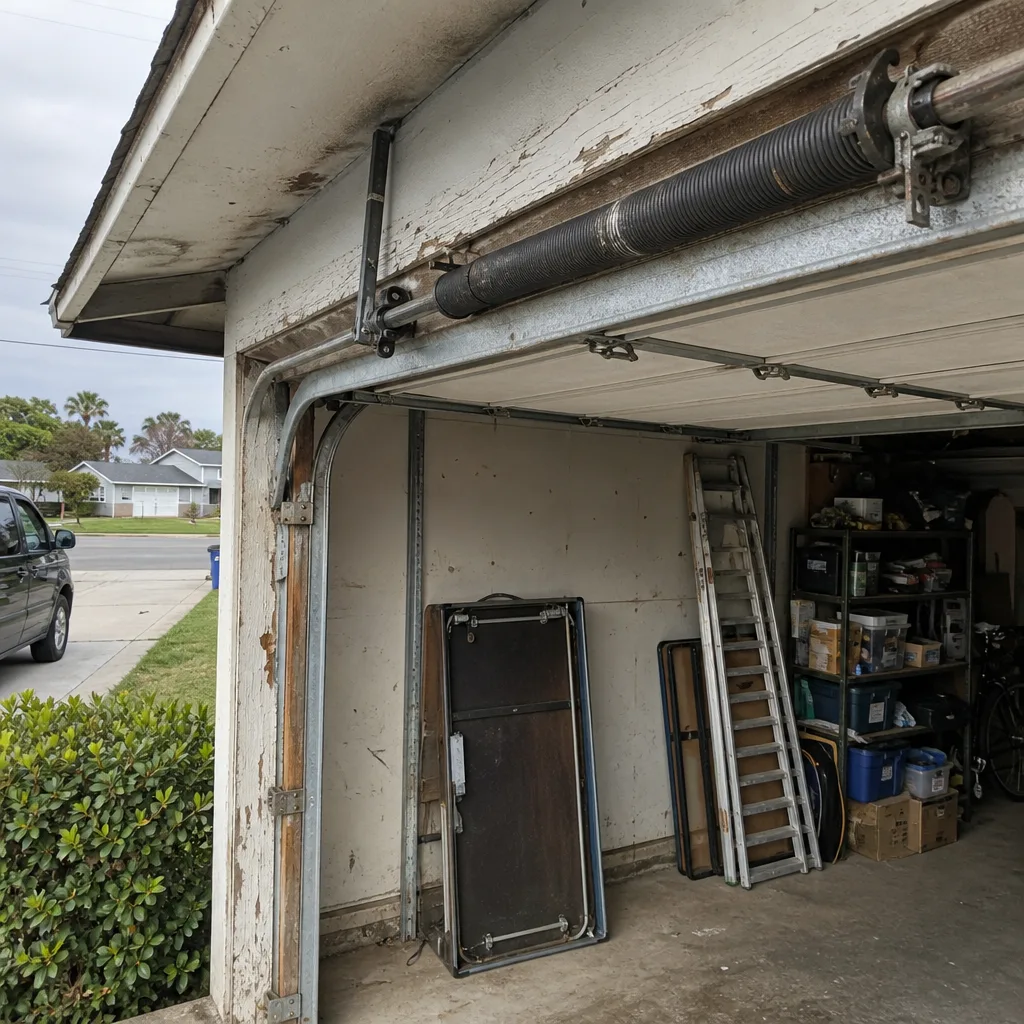 Before
 After
After Before
 After
AfterGarage Door Permits, Codes & Inspections in CA: What You Need to Know
A Long Beach homeowner found out during escrow that her garage door replacement three years earlier required a permit she never pulled. The buyer’s lender flagged it. The deal nearly fell apart over a $150 permit that the installing contractor told her wasn’t necessary. She called us after her agent called her, frantic, and we walked her through the retroactive permit process. It worked out, but it cost her three weeks of delay and about $400 in fees and inspections. This guide covers the permit rules in California, what Long Beach requires specifically, what Title 24 means for your garage door, and how to fix a permit problem before it becomes a sale problem. For related reading, see our Garage Door Warning Signs: A Long Beach Homeowner’s Reference Guide.
Quick Answer
In California, replacing a garage door with a like-for-like unit generally does not require a permit, but any modification to the opening size, header, or structural framing does. Adding an opener to a previously manual door in an ADU, converting a garage to conditioned space, or installing a door on a garage that shares a wall with living space can trigger Title 24 energy code requirements. In Long Beach, over-the-counter residential permits run 2 to 4 weeks, and unpermitted work can be retroactively permitted through an as-built inspection, though it costs more than doing it right the first time. When in doubt, call the Long Beach Development Services Department before the first screw comes out, not after the last one goes in.
Table of Contents
- When You Need a Permit in California
- The Long Beach Permit Process: What to Expect
- Title 24 and Garage Doors: What Most Contractors Don’t Tell You
- What an Unpermitted Garage Door Does to Your Insurance Claim
- How to Retroactively Permit Work Done Without a Permit
- What Inspectors Actually Look At
- HOA and Historic District Requirements in Long Beach
- Common Mistakes to Avoid
When You Need a Permit in California
California building code draws a line between replacement and modification. The line matters because one side requires a permit and the other doesn’t, and the difference is not always obvious from the driveway. The California Residential Code (CRC), specifically the sections covering alteration and repair, says a permit is not required when you replace a component with an equivalent component that serves the same purpose. A garage door is a building component. Swap one single-width steel door for another single-width steel door with the same opening dimensions, and you’re generally in the clear. Change the opening, and you’ve crossed the line.
Here’s what triggers a permit in California for garage door work:
- Modifying the opening size. Widening, raising, or lowering the rough opening requires a permit because you’re altering structural framing. The header over the opening carries roof load, and if you touch it, the building department wants to see the engineering.
- Replacing or reinforcing the header. Even if the opening stays the same size, replacing a damaged or undersized header requires a permit and typically a structural engineer’s stamp.
- Adding a door where there wasn’t one. Enclosing an open carport or cutting a new garage door into an existing wall requires a permit, full stop.
- Converting manual to automatic in certain situations. Adding an opener to a manual door in a detached garage is usually fine without a permit. Adding one in an ADU where the garage shares a wall with living space may trigger energy code review because the door now connects conditioned and unconditioned space.
- Installing a fire-rated door. If your garage is attached to the house, the wall between the garage and living space already requires a fire-rated door. Replacing that door with a non-rated unit is both a permit violation and a fire-code violation, and it’s the kind of thing home inspectors flag every time.
In Long Beach, we see a lot of 1920s and 1930s Spanish and Craftsman homes with narrow, single-car garages built for Model A Fords, not modern SUVs. Homeowners often want to widen the opening from 8 feet to 16 feet. That’s a structural job with a permit, an engineer, and usually a new header made of LVL or steel. We’ve done enough of them to know that the permit is the cheap part of that project.
The Long Beach Permit Process: What to Expect
The Long Beach Development Services Department handles residential building permits. Their office is at City Hall on West Ocean Boulevard, and the permit center has walk-in hours for over-the-counter review. For a straightforward garage door opening modification, the process looks like this:
- Gather your materials. You’ll need a site plan or plot plan showing the garage location relative to property lines, a detailed drawing of the existing and proposed opening, and structural calculations if the header is being altered. For most residential header replacements, a licensed engineer or architect prepares a simple stamped drawing that runs $400 to $900.
- Submit in person or online. Long Beach accepts residential permit applications through the Development Services online portal or at the permit center counter. Over-the-counter review means a plan reviewer looks at your application while you wait, assuming it’s a simple alteration. In our experience, simple garage opening modifications are almost always over-the-counter eligible.
- Pay the permit fee. Plan check fees for a garage door opening modification typically run $150 to $300 in Long Beach, depending on the valuation of the work. The permit fee is calculated as a percentage of the project valuation, and there’s often a separate inspection fee.
- Schedule inspections. You’ll need a framing inspection after the new header is installed but before the wall is closed up, and a final inspection after the new door is hung and operational. Long Beach inspectors are generally good about scheduling within a few days, though summer months back up.
- Close the permit. After final inspection passes, the permit is signed off and the record is closed. That signed-off permit is your proof that the work was done legally, and it’s what a home inspector and lender will ask for at sale time.
The full timeline for an over-the-counter residential permit in Long Beach is currently 2 to 4 weeks from submission to issuance. That includes plan review time, fee payment, and scheduling the first inspection. If you’re replacing a door without changing the opening, there’s no permit and no timeline to worry about.
Title 24 and Garage Doors: What Most Contractors Don’t Tell You
California’s Title 24 energy code catches homeowners off guard with garage doors, and it’s not intuitive. Title 24 sets minimum insulation and air-sealing requirements for building components that separate conditioned space from unconditioned space. A garage is unconditioned space. The living area of your house is conditioned. So the garage door itself usually doesn’t need to meet any specific insulation requirement. Until it does.
Here’s when Title 24 applies to garage doors:
- The garage is conditioned space. If you’ve converted a garage into a workshop, home office, or bonus room with heating or cooling, that garage is now conditioned space. Replacing its door means the new door must meet Title 24 insulation requirements for exterior doors, which typically means an R-value of at least 3 for the door itself, plus proper weatherstripping and air sealing around the perimeter.
- The garage shares a wall with living space. This one is subtle and it’s the one contractors miss. If an attached garage shares a wall with the living area, Title 24 treats the garage wall and the door in that wall as part of the building envelope. Replacing a door between the garage and the house with a non-insulated, non-weatherstripped unit creates an air leak that Title 24 wants addressed. The inspector may flag it even if no permit was pulled, because energy compliance is checked during any permitted alteration.
- ADU conversions. Long Beach has thousands of accessory dwelling units either built or in the pipeline, and many are above or adjacent to garages. When a garage is part of an ADU envelope, the garage door often needs to meet the same insulation standard as the ADU’s exterior walls. That means a door with an R-value of 3 to 6, depending on the climate zone and the energy model for the building. Long Beach sits in climate zone 6, which has specific requirements.
- New construction and additions. Any new garage built in Long Beach must comply with Title 24 from day one, and that includes the garage door’s insulation properties, air sealing, and installation quality. The energy model for the building will specify what R-value the door needs.
In practical terms, an insulated steel-back garage door with an R-value of 3 to 6 runs $200 to $500 more than a comparable non-insulated door, and it’s worth it long before you factor in energy savings. It’s quieter, it’s stiffer, it holds up better to coastal salt air, and it keeps the garage 10 to 15 degrees cooler in a Long Beach August. If you’re replacing a door on a conditioned garage or an ADU, buy the insulated one and skip the argument with the inspector.
What an Unpermitted Garage Door Does to Your Insurance Claim
This is the part nobody tells you until it’s too late. Unpermitted work on a garage, especially work involving the door or opening, gives your homeowner’s insurance company a reason to deny a claim. Not a maybe, not a “depending on the adjuster.” A documented, written basis for denial.
Insurance policies require that modifications to the structure be done legally. When you modify a garage opening without a permit and then the garage burns down, the insurer investigates. Adjusters pull building department records as standard practice on structural fire claims. If they find unpermitted structural work, they can argue that the modification contributed to the loss, violated the policy’s concealed-fault exclusion, or invalidated the coverage on the garage entirely. We’ve had Long Beach customers who lost tens of thousands of dollars in garage damage claims because a previous owner had widened an opening without permits 15 years earlier.
The specific risks break down like this:
- Fire claims. Garage fires are among the most common residential fires in California, and insurers scrutinize them hard. Unpermitted modifications to the garage structure give the adjuster an easy denial path.
- Earthquake claims. Long Beach is earthquake country, and unpermitted structural work on a garage opening weakens the building’s lateral resistance. If a retrofit or opening modification wasn’t engineered and inspected, the earthquake claim gets contested.
- Wind and storm damage. An unpermitted, undersized header over a garage door opening is a known failure point in high-wind events. Insurers know this, and they look for it.
- Subrogation claims. If the garage door falls on a car or a person and the door was installed without a permit, liability insurance may deny coverage because the install was not code-compliant work performed by a licensed contractor.
The fix is to permit the work retroactively before you file a claim, not after. Once a claim is filed, the insurer’s investigation timeline moves fast, and retroactive permitting takes weeks. Do it now, not later. Our more guides & resources are always a good starting point if you’re not sure where your property stands.
How to Retroactively Permit Work Done Without a Permit
Long Beach allows retroactive permits for unpermitted work, including garage door modifications. The process is called an after-the-fact permit, and it’s more expensive and more involved than getting the permit first, but it’s not the nightmare many homeowners fear. We’ve walked dozens of Long Beach homeowners through this, including the one from the opening of this guide.
- Document the work. Take photos of the finished garage door, the opening, the header if visible, and the surrounding walls. Measure the opening precisely. The inspector will need to see what was done, and photos speed up the review.
- Hire a structural engineer if the opening or header was modified. Because the inspector can’t see inside the wall, Long Beach requires an engineer’s evaluation for after-the-fact structural work. The engineer opens a section of drywall, inspects the header and connections, and writes a letter stating the work meets or doesn’t meet current code. If it doesn’t meet code, you’ll need to fix it before the permit can be issued. Engineer fees run $500 to $1,200 for this.
- Submit the after-the-fact application. The Long Beach Development Services Department accepts after-the-fact permit applications at the permit center. You’ll pay the standard permit fee plus a penalty. The penalty is typically double the original permit fee, so that $150 permit becomes $300 in permit fees plus plan check fees plus the inspection fee. It stings.
- Schedule the as-built inspection. An inspector comes out and verifies that the work matches the engineer’s letter and meets code. If the door installation itself is sound but the opening modification was unpermitted, the inspector focuses on the structural elements, not the door hardware.
- Close the permit and keep the record. Once the inspector signs off, the permit is closed and the record is clean. Keep a copy of the final permit with your homeowner’s documents. You’ll need it at sale.
The total cost for an after-the-fact permit in Long Beach, including engineer, permit fees, penalty, and inspection, typically lands between $800 and $1,800. That’s a lot more than the $150 to $300 it would have cost to permit the work up front. If you’re planning a garage door replacement or opening modification, get the permit first. If you’re buying a home and suspect unpermitted garage work, ask for the permit records before you close, not after.
What Inspectors Actually Look At
Garage door inspections in California focus on safety, structural integrity, and, increasingly, energy compliance. Knowing what the inspector checks helps you prepare the install correctly the first time. Here’s the list, based on what Long Beach inspectors have flagged on jobs we’ve seen:
- Header size and bearing. The inspector confirms the header over the opening is sized correctly for the span and load. For a 16-foot opening, that usually means a 4×12 or engineered LVL beam, not a pair of sistered 2x6s. Undersized headers are the most common after-the-fact permit failure we see, and they’re the most expensive to fix.
- King studs and jack studs. The vertical framing at each side of the opening needs full-height king studs and proper jack studs under the header. Missing or hacked-up framing gets flagged every time.
- Fire separation. If the wall between the garage and living space is being modified, the inspector checks for the required 5/8-inch Type X drywall and a fire-rated door with a self-closing hinge. In Long Beach, attached garages on vintage homes often fail this because the original door from the garage to the house was never fire-rated.
- Electrical safety. If a garage door opener is installed, the inspector verifies the outlet is GFCI-protected and that the opener has a working auto-reverse safety sensor system. Sensors mounted higher than 6 inches off the floor fail inspection.
- Title 24 compliance. For any permit involving the building envelope, the inspector checks the door’s insulation R-value against the approved plans and looks for proper weatherstripping on all four sides. Gaps at the top and sides are noted, and they’ll fail you on them.
- Finished workmanship. The inspector verifies the door operates smoothly, the track is properly braced, and the stop molding seals against the door face. A door that binds, rattles, or gaps at the bottom won’t pass.
Most of these are checks on the framing and fire safety, not the door hardware itself. That’s because the door is a manufactured, tested component, and the weak points in a garage installation are almost always the structure around the door and the connection to the house, not the door panel. If you’re getting Garage Door Installation in Long Beach, make sure whoever hangs the door knows what the inspector will be looking at before the wall gets closed up.
HOA and Historic District Requirements in Long Beach
Permits aren’t the only approval you might need. Long Beach has dozens of historic districts, including Bluff Park, Belmont Heights, Rose Park, and the Willmore City District. If your home is in a designated historic district or is a designated landmark, you may need a Certificate of Appropriateness from the Cultural Heritage Commission before the city will issue a building permit. That’s a separate review process, and it can add 4 to 8 weeks to your timeline.
Historic district review focuses on character-defining features. A garage door on a 1920s Spanish Revival is a character-defining feature, and replacing a carved wood carriage door with a smooth steel panel door will likely get denied or require design revisions. The commission will look for materials, panel patterns, window placement, and hardware that match the original architectural style. Companies like Clopay and Amarr make steel doors that mimic wood carriage construction convincingly, and they’re often accepted in historic districts where a true wood door would fail modern energy and safety review.
HOAs add another layer. Long Beach has hundreds of HOAs, from small four-unit buildings to large planned communities on the east side. Most HOAs have architectural guidelines that restrict garage door styles, colors, and materials. An HOA can fine you or force a replacement even if the city permit is clean and the install is perfect. We’ve replaced doors in Naples and Belmont Shore where the HOA specified the exact door model, finish, and window pattern, and the homeowner had no say beyond choosing the opener. Before you buy a door, check the HOA’s architectural guidelines. It’s a phone call that saves a $3,000 mistake.
For homeowners in older Long Beach neighborhoods doing mixed projects, Garage Door Repair in Long Beach often crosses paths with permit work, since the same crew sees the whole picture. When we’re repairing a 30-year-old door on a historic home, we flag the permit and HOA questions right there at the repair, not after the fact.
Common Mistakes to Avoid
- Trusting a contractor who says permits aren’t needed without checking yourself. The contractor might be right, might be wrong, or might be trying to avoid the paperwork and inspection schedule. Call the Long Beach Development Services Department and ask. The phone call is free, and the answer is binding.
- Assuming all garage door replacements are permit-free. Like-for-like replacement of the door itself usually skips the permit, but the minute you touch the framing, you’re in permit territory. If the opening changes size, you need one.
- Ignoring Title 24 when converting or finishing a garage. Turn a garage into a workshop with a space heater, and you’ve created conditioned space. The old uninsulated garage door now violates energy code, and your next inspection or sale will surface it.
- Skipping the permit on a header repair. A sagging header over a garage door is a structural problem, not a cosmetic one. Replacing it without an engineer’s stamp and a permit creates a hidden defect that follows the house for decades.
- Buying a home without checking permit records for the garage. A title search doesn’t reveal unpermitted garage work. Pull the building department records before you close, or ask your inspector to flag anything that looks non-original. The cost of finding it after closing is always higher.
- Waiting to retroactively permit until you’re under contract to sell. After-the-fact permitting takes weeks, and escrow timelines don’t flex. Buyers’ lenders can and do kill deals over unpermitted work. Permit it now, on your schedule, not under a 21-day escrow deadline.
When to Call a Professional
If your garage door project touches the header, the opening size, the wall between the garage and the house, or any conditioned space, that’s not a DIY job and it’s not a job for a contractor who waves off the permit question. You need a licensed contractor who understands California residential code, Long Beach permitting, and Title 24 energy requirements. See How to Hire a Garage Door Contractor in Long Beach: A Step-by-Step Guide for what to look for. You also need someone who will actually pull the permit, schedule the inspections, and stand behind the work when the inspector shows up. An opener swap or a like-for-like door replacement is different: you can often skip the permit, and if the door company tells you no permit is needed, verify it with the city and move on. Otto’s Garage Door offers free estimates in Long Beach, and if a permit is required on your job, Otto will tell you before you sign anything, not after. Call (562) 373-6685 and a live person answers.
Frequently Asked Questions
In most cases, replacing a garage door with a like-for-like unit of the same size does not require a permit, but changing the opening size, header, or structural framing does. Like-for-like means the same rough opening dimensions and the same functional type of door. If you’re unsure, call your local building department with the details. Call Otto’s Garage Door at (562) 373-6685 and we’ll tell you straight whether your job needs a permit, no charge for the answer.
Over-the-counter residential permits in Long Beach take 2 to 4 weeks from submission to issuance for a simple garage door opening modification. Historic district approvals and after-the-fact permits add several weeks. Plan your project timeline around the permit, not the other way around. Call (562) 373-6685 for a free estimate that includes the permit timeline for your specific job.
Yes, Long Beach allows after-the-fact permits for unpermitted garage work. The process requires an as-built inspection, often a structural engineer’s letter if framing was modified, and fees that are typically double the original permit cost. Expect to spend $800 to $1,800 all-in. Permit it retroactively now rather than waiting until you’re under contract to sell, when escrow deadlines make it an emergency. Call (562) 373-6685 and Otto can walk you through it.
Title 24 applies if your garage is conditioned space, if it shares a wall with living space and the door in that wall is being replaced, or if the garage is part of an ADU envelope. The requirement is usually an insulated door with an R-value of 3 to 6 plus proper weatherstripping and air sealing. Many contractors miss this, and inspectors catch it on permitted jobs. If you’re replacing a garage door and the garage is heated or cooled, buy the insulated door. Call (562) 373-6685 for a free quote on an insulated, Title 24-compliant door.
Yes. Unpermitted structural modifications to your garage give insurance companies a documented basis to deny claims for fire, earthquake, wind, and liability. Adjusters pull building department records on structural claims, and finding unpermitted work moves you from covered to contested quickly. Retroactively permit the work now, before a claim, not in the middle of one. Call (562) 373-6685 and Otto will tell you what’s needed and what it costs.
Many do. HOAs in Long Beach neighborhoods like Naples, Belmont Shore, and the east-side planned communities often have architectural guidelines that specify door style, color, material, and window patterns. An HOA can force a replacement even if the city permit is clean and the installation is code-compliant. Check your HOA’s guidelines before you buy a door, not after it’s hung. Otto’s Garage Door works with local HOA requirements regularly, and we’ll help you pick a door that passes. Call (562) 373-6685 for a free consult.
The Bottom Line
California’s garage door permit rules come down to one question: are you replacing a component or altering the structure? Replace the door with a like-for-like unit and you’ll usually skip the permit. Change the opening, the header, or the fire separation and you need one, and in Long Beach that permit runs 2 to 4 weeks over the counter. Title 24 adds insulation requirements when the garage is conditioned space or part of an ADU, and unpermitted work creates insurance and resale problems that cost far more than the permit ever would have. If you’re not sure where your project falls, call Otto’s Garage Door. Otto answers the phone himself, quotes the job on the call, and holds that number at the door. A door is 200 pounds riding on two springs. Respect it, and respect the county that inspects it. Call (562) 373-6685 for a free estimate, and we’ll tell you exactly what your job needs, permit included, before you sign anything.
For more on what we do across Long Beach, start at the Otto’s Garage Door home page. If you need an opener replaced or installed alongside your permit work, see Garage Door Opener in Long Beach.
Written by Otto Reinhardt, Owner at Otto’s Garage Door, serving Long Beach since 2004.